Two days. That's what we gave Quito and, looking back, it was enough to see the essentials without rushing: a full day for the historic center and another for Mitad del Mundo, the Teleferico and the north of the city. If you only have a weekend, it's doable, and here's how we did it.
Although I'm Ecuadorian, I've always visited Quito for athletics competitions, so I've seen a lot, but never as a tourist like this time. This time we wanted to take it slow and show Karyna the city the way it deserves. We stayed in the north, near Parque La Carolina, a more modern, quiet area that's very well connected to the city center thanks to the metro, which really helps getting around the city.
What we didn't expect was for a city at 2,850 meters to keep us looking up all weekend: domes, towers, volcanoes and a cable car that takes you up to almost 4,000 meters.
📋 What you'll find in this post
How to get from the north to Quito's historic center by metro
Plaza San Francisco, its church and the Capilla de Cantuña
La Ronda street and El Panecillo
Plaza Grande, Carondelet and paila ice cream
La Compañía de Jesús and the heritage houses
Coffee with a view of Plaza San Francisco
Basilica del Voto Nacional: climbing the towers
Quito Teleferico
Mitad del Mundo
Parque La Carolina and the Botanical Garden
Pedro and Karyna's Tips
Frequently Asked Questions
How to get from the north to Quito's historic center by metro
We dedicated the entire first day to the historic center. From La Carolina we took the metro, which is the best thing that has happened to Quito in years: the San Francisco station leaves you literally in the square. It costs $0.45 and in no time you're in the heart of the colonial quarter, with no traffic and no haggling with taxis.
Coming out of the metro and suddenly finding yourself in Plaza San Francisco is one of those entrances you never forget.
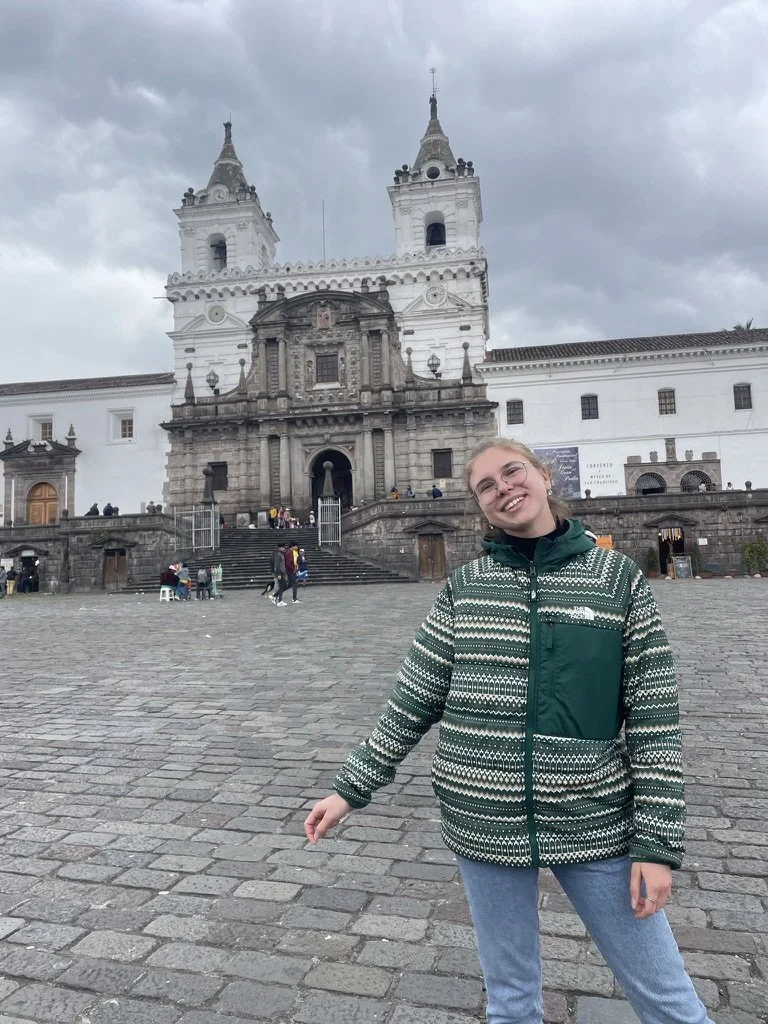
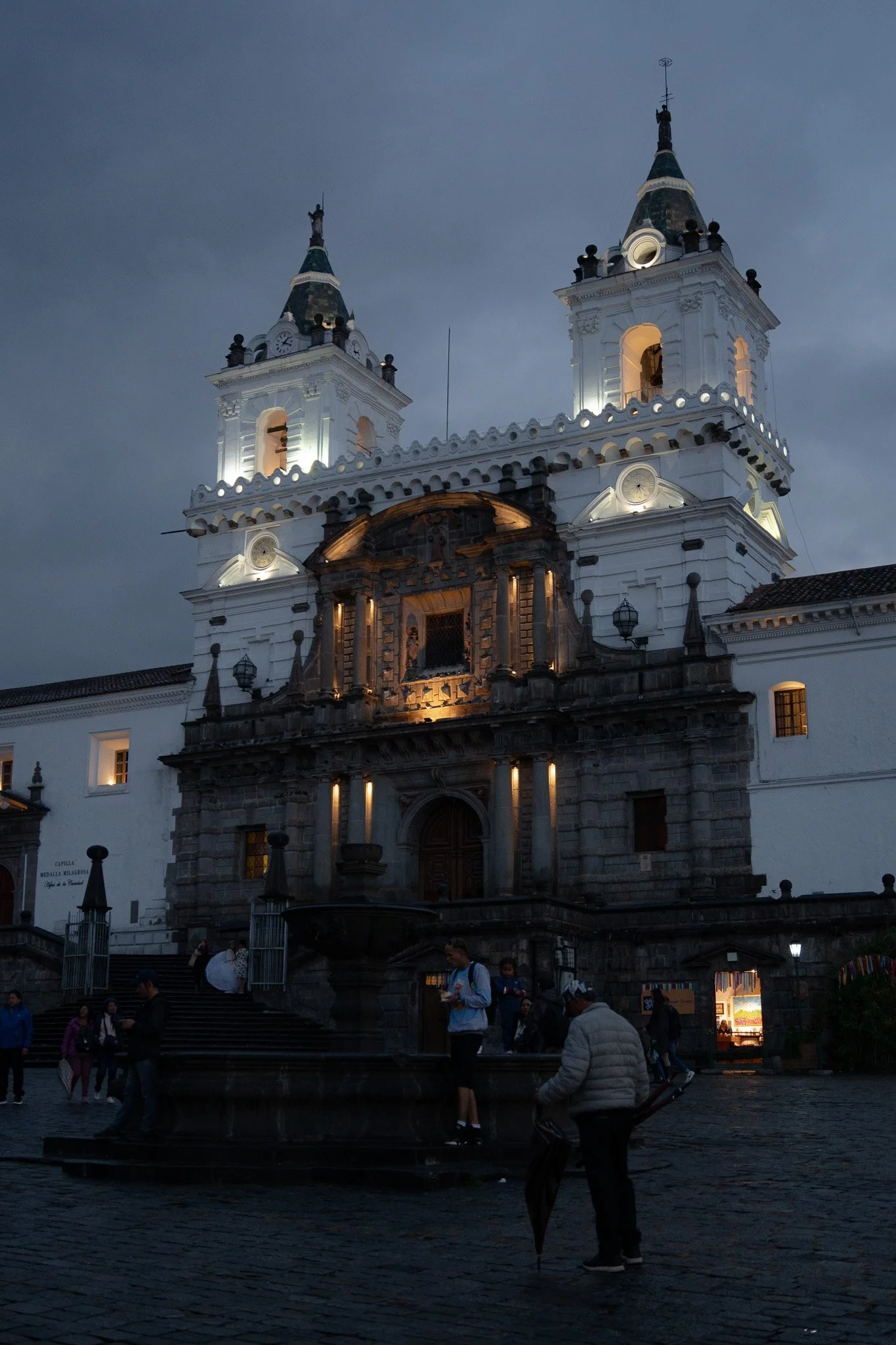
This square is without a doubt one of the most iconic in the city, and today it's full of life because, in addition to the San Francisco church, it's surrounded by stunning hotels, plenty of cafés and shops. You also get a unique view of El Panecillo.
Plaza San Francisco, its church and the Capilla de Cantuña
The square is huge, cobbled, with the San Francisco church presiding over everything and Pichincha peeking out behind. It's one of the oldest colonial complexes in the Americas, and you can tell: stepping into the church means going from the light of the street to an interior full of gold and carved wood that's hard to take in.
Right next door is the Capilla de Cantuña, and here's the story we liked most from the day. Legend says Cantuña was commissioned to build the atrium of San Francisco in an impossible timeframe. Desperate, he made a pact with the devil: the atrium in exchange for his soul. The devil held up his end, but Cantuña hid a stone before they finished. Since one was missing, the deal was broken and he saved his soul.
They say that stone is still missing. We didn't find it, but we didn't search very hard either. Here's the location below.
La Ronda street and El Panecillo
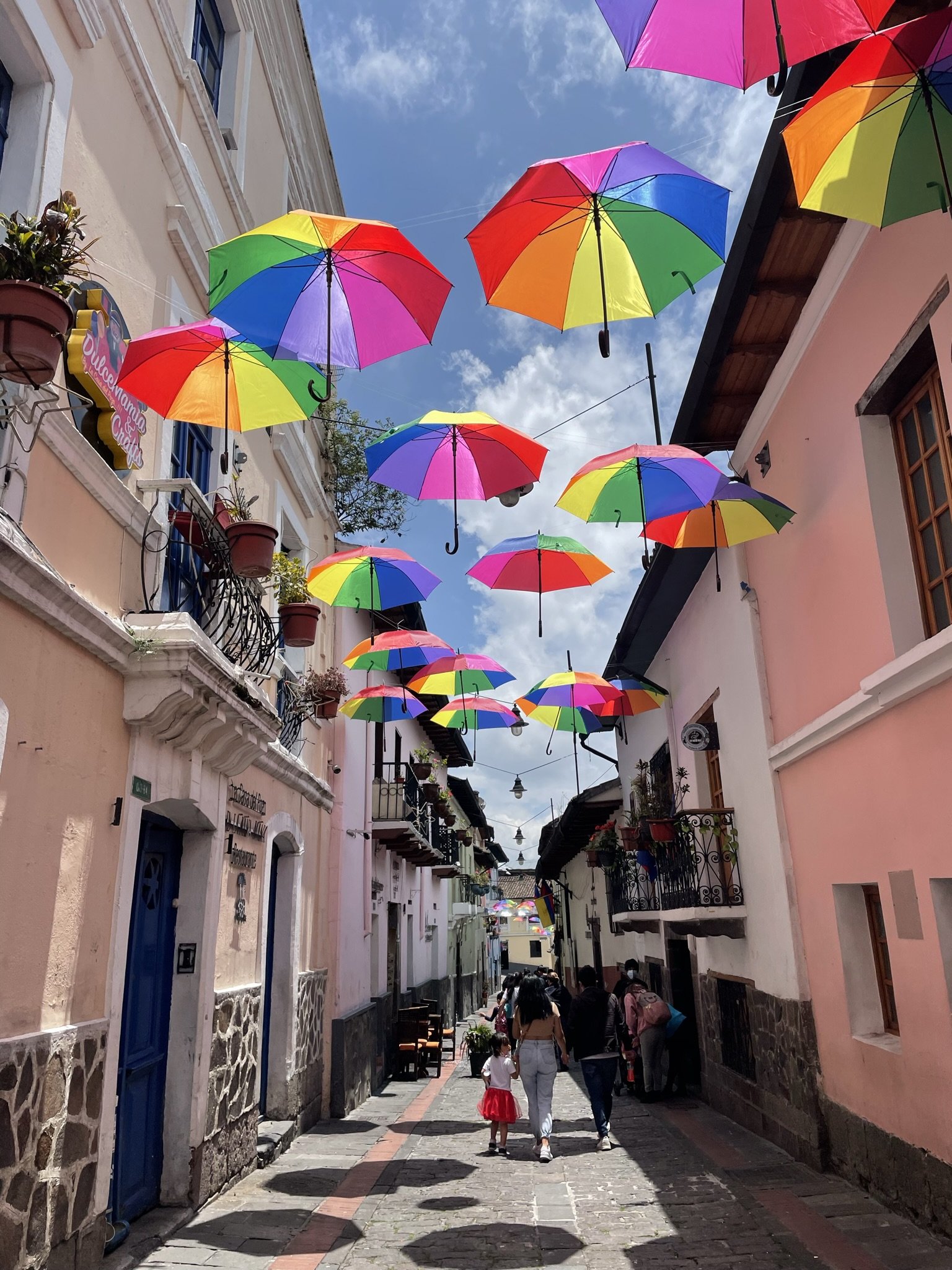
From San Francisco we walked down to La Ronda, a narrow, cobbled street lined with balconies full of flowers. During the day it's calm, with craft shops and small cafés. At night it changes completely: music, canelazo and a lot more atmosphere. Many people say it can be unsafe, but we had no uncomfortable situations because there's now a lot of life and surveillance; still, as always, you need to stay very alert.
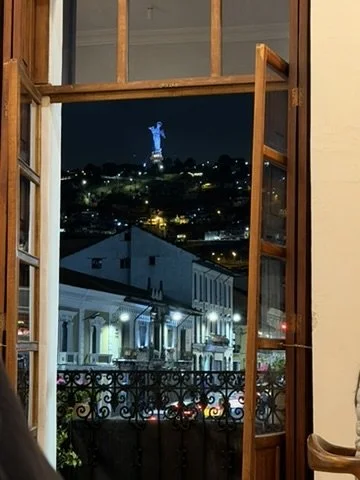
Along the way we saw El Panecillo from afar, with the Virgin of Quito watching over the city from above. We didn't go up. If you want to, take a taxi and don't walk up the stairs: it's one of the few safety recommendations every Quiteño will repeat to you.
Plaza Grande, Carondelet and paila ice cream
Plaza Grande is the political heart of Ecuador. On one side is the Carondelet Palace, the seat of the government, and on the other the Metropolitan Cathedral. There are always people sitting on the benches, shoeshine workers on the job and a group of retirees loudly fixing the country lol. It's a place with so much going on that you really must visit it when you're in the capital of the Ecuadorians.
Here we stopped for something that was a must: paila ice cream. It's made the old-fashioned way, whipping fruit juice in a bronze paila over ice with salt until it thickens. It comes out lighter than regular ice cream, almost like sorbet, with flavors like mora, naranjilla or guanábana. Karyna had seconds because she loved how it's prepared and its flavor; there was no way she wouldn't like it.
La Compañía de Jesús and the heritage houses
A few steps from Carondelet, along García Moreno street, is the Church of La Compañía de Jesús, the Jesuit church. From the outside it's already impressive, but inside it's covered in gold leaf from top to bottom. It's one of those places where you stay quiet for a while, not quite sure where to look. I had visited it a few times before because I went to a Jesuit school, so I wanted Karyna to see it.
Heads up: there's an entrance fee and photos aren't allowed inside. You'll have to keep this one in your memory.
Afterwards we went into several of the heritage houses in the center: colonial mansions with inner courtyards that are now restaurants, shops and cafés. It's worth popping in even if you're not planning to eat, because the courtyards are beautiful and nobody will kick you out for looking.
📍 La Compañía de Jesús on Google Maps
Coffee with a view of Plaza San Francisco
In the afternoon, with our legs begging for a break, we looked for a café with a view of Plaza San Francisco. It was one of the best moments of the trip. From above you can see the whole square, with the church in front and afternoon light falling over the stones.
The café we visited this time is called Numen.
If you're doing the historic center in one day, save this moment for the end. You'll be glad you did.
Basilica del Voto Nacional: climbing the towers
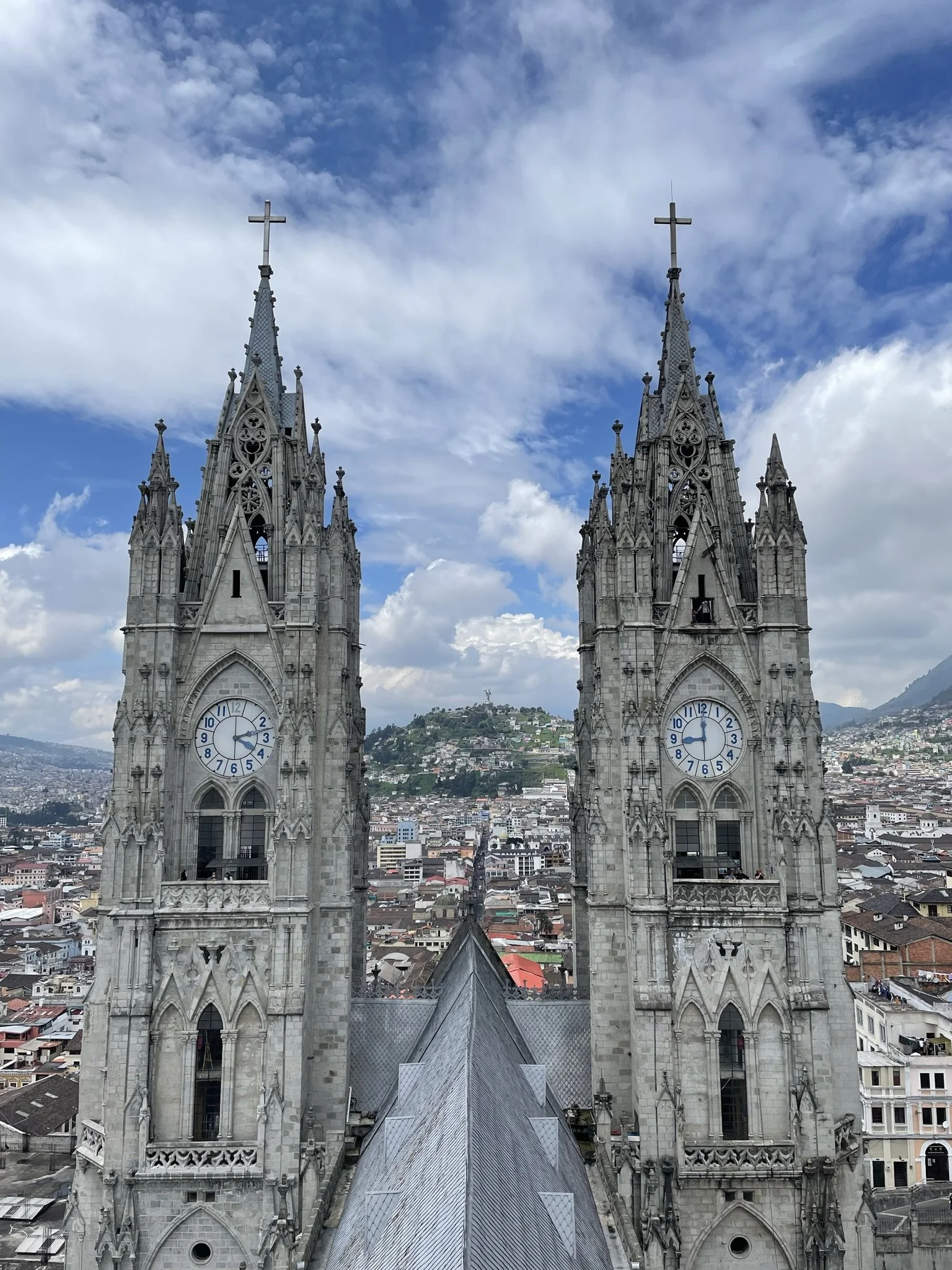
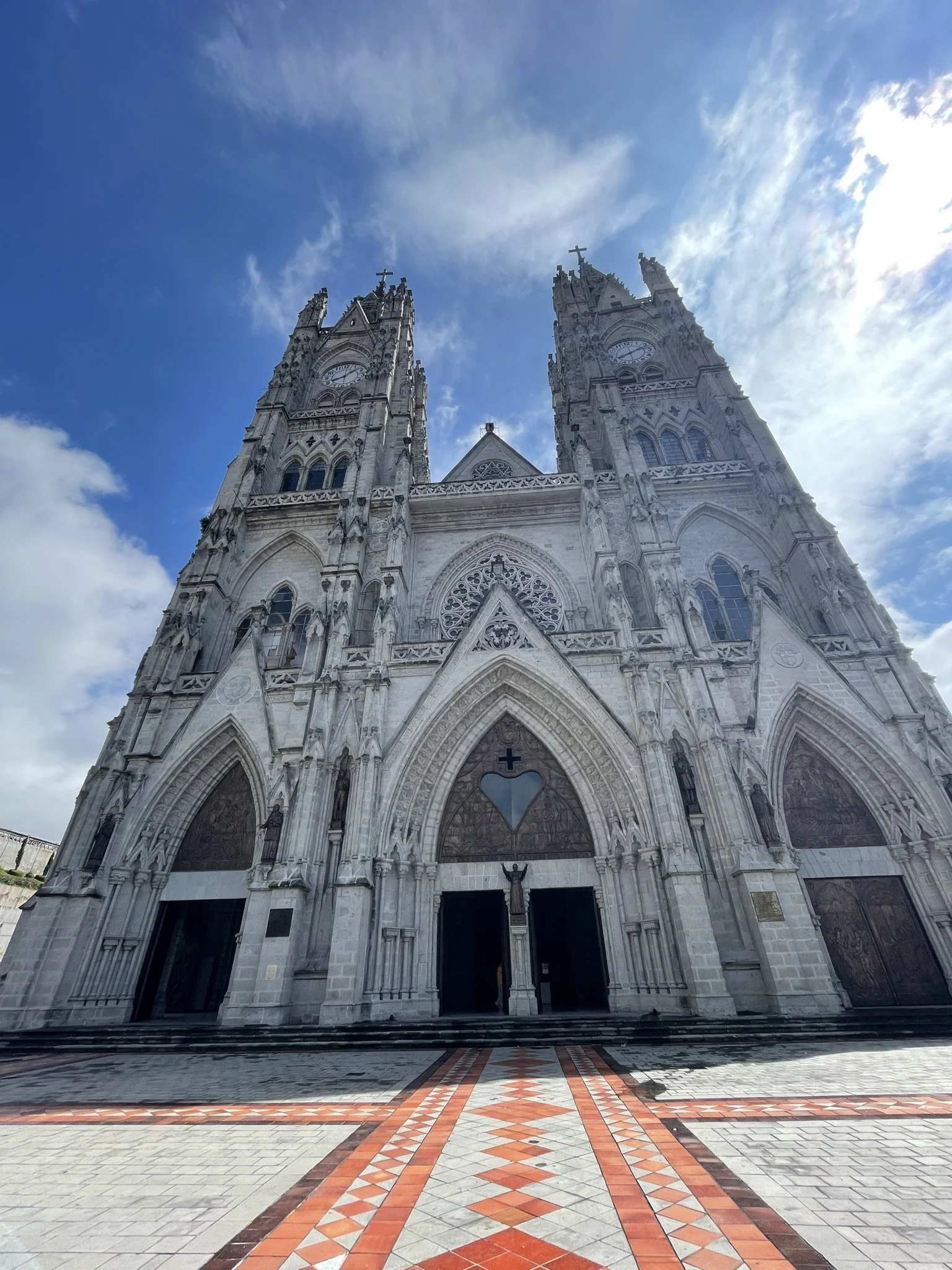
The Basilica del Voto Nacional is the largest neo-Gothic church in the Americas, and yet what caught our attention most were the gargoyles. Instead of monsters, there are turtles, iguanas and armadillos, animals from Ecuador and the Galápagos peeking out from the façade, which is definitely one of the things that makes this basilica unique.
The best thing to do is climb the towers. The last part is an almost vertical and quite narrow staircase, so if you're afraid of heights, think twice. But the views of Quito from up there, with the historic center at your feet and El Panecillo right in front of you, are worth every step.
Quito Teleferico
On the second day we started by riding the Teleferico, on the slopes of the Pichincha volcano. The cable car takes you from about 2,950 meters up to almost 3,950, and from the top you can see all of Quito stretched out between mountains, a very long city that seems never to end.
Up there it's really cold and the air feels heavy. We walked a little along the trails, but slowly: at that altitude any slope feels twice as long. If you're lucky and it's clear, you can see the volcanoes around the city. There are also horses, which personally we don't like being used to carry people up the mountain, and a restaurant where you can take a break and recharge your energy.
Go in the morning. In the afternoon the clouds usually roll in and you can end up staring at a white wall.
📍 Quito Teleferico on Google Maps
Mitad del Mundo
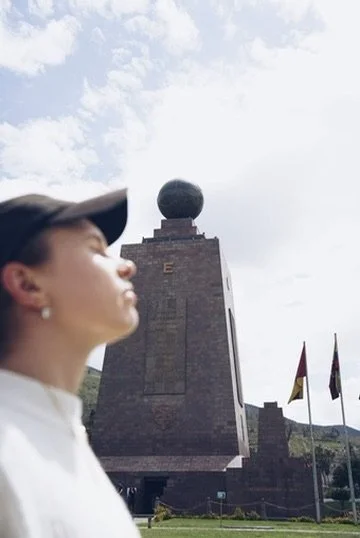
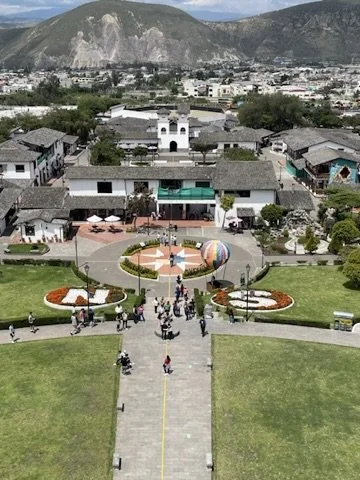
You can't go to Quito without standing on the equator line. The Mitad del Mundo City is about 26 kilometers north of the city, with its 30-meter monument and the famous yellow line where everyone takes the photo with one foot in each hemisphere. We did too, of course.
The fun fact: with modern GPS measurements we know the real equator doesn't pass exactly through the monument, but a few meters away. It doesn't matter. The photo comes out just as good, and the complex has museums and exhibits about the French geodesic mission that came to measure the Earth in the 18th century.
You can also do the typical activities, like trying to balance an egg on the middle of the world, climbing the monument where there is a lot of information inside, and tasting plenty of traditional food at the variety of restaurants in the complex.
Parque La Carolina and the Botanical Garden
We closed the weekend close to home, in Parque La Carolina. It's the great lung of north Quito: people running, families, impromptu soccer games and that Sunday atmosphere we love so much.
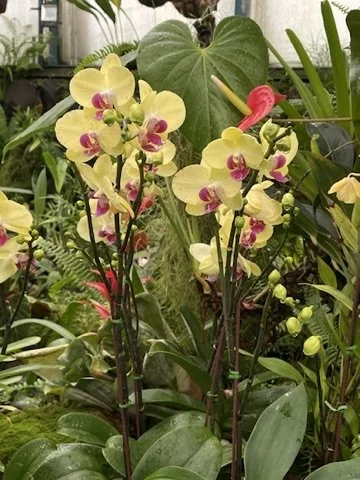
Inside the park is the Quito Botanical Garden, and it was a surprise. It has the largest orchid collection in the country, greenhouses and a representation of Ecuador's ecosystems, from the páramo to the Amazon, in a space you can comfortably walk through in an hour or so. After two days of churches and stone, a bit of green was just what we needed.
It was the perfect way to say goodbye to Quito.
💡 Pedro and Karyna's Tips
🏨 Where to stay We stayed in the north, near Parque La Carolina, and we recommend it: it's a quiet area with restaurants and supermarkets, and a few minutes from the center by metro. If you prefer to sleep in the heart of the historic center, it has its charm, but at night it gets pretty empty.
🚇 Getting around by metro One single line connects the north with the historic center for $0.45. For Mitad del Mundo and the Teleferico, a taxi or Uber is most convenient.
🏔️ Watch out for altitude Quito is at 2,850 meters and the Teleferico takes you to almost 4,000. On the first day, take it easy, drink plenty of water and don't schedule strenuous climbs right after landing.
🌦️ Dress in layers In Quito they say there are four seasons in one day, and it's true. Strong sun at midday, cold in the morning and almost certain rain in the afternoon. Bring a light jacket and an umbrella in your backpack at all times.
🛡️ Safety The historic center during the day is calm and full of tourist police, but watch your phone in crowded areas. For El Panecillo, always take a taxi.
💵 Bring cash Ecuador uses the US dollar. For church entrances, ice cream stands and small shops, small bills are best.
❓ Frequently Asked Questions
How many days do you need to see Quito? With 2 days you can see the essentials: one for the historic center and another for Mitad del Mundo, the Teleferico and the north. If you want to add day trips like Mindo, Otavalo or Cotopaxi, plan at least 3 or 4 days.
How do you get to Mitad del Mundo from Quito? The most convenient option is a taxi or Uber, about 40-60 minutes depending on traffic. By public transport, there are buses from La Ofelia, in the north of the city, heading to Mitad del Mundo or San Antonio de Pichincha. General admission costs about $5.
How much does the Quito Teleferico cost? Entry for foreigners costs $9 round trip ($5.25 with an Ecuadorian ID card). It's open every day: on weekdays from 10:00 and on weekends from 8:00.
Is the historic center of Quito safe? During the day, yes, with the usual precautions for any big city: keep your phone safe and your backpack in front of you in crowded areas. For El Panecillo, it's best to take a taxi rather than walk.
How much does it cost to climb the Basilica del Voto Nacional? Entry to the towers costs about $3 for foreigners, and the nave about $2. Plan an hour and a half to see it at a relaxed pace, and go up early for better chances of clear skies.
What is paila ice cream? It's Quito's traditional ice cream, made by whisking fruit juice in a bronze paila set over ice with salt. It's lighter than regular ice cream, almost like a sorbet. The typical flavors are mora (Andean blackberry), naranjilla and guanábana (soursop).
👉 If this helped you plan your trip, follow us on Instagram (@pedroandkaryna) or TikTok (@karynandpedro), where we share behind-the-scenes content from Quito and the rest of our route through Ecuador before it makes it to the blog. And if you're heading south, you'll find our 8 things to do in Cuenca and the Cuenca, the Amazon and Quilotoa in 6 days itinerary.
Have you been to Quito? Is there a spot we missed that you would add for next time? Tell us in the comments 👇
