Seven days. That's how long we needed to explore the Golden Triangle of India: Delhi, Agra and Jaipur, without running ourselves ragged and without our budget slipping away along the way. We arrived from Colombo with SriLankan Airlines (read our Sri Lanka blog), after eleven days in Sri Lanka, tired but ready for whatever came next. And what came was a lot: huge mosques, a Taj Mahal that really is as beautiful as they say, a nearly intact city wall, and leopards just half an hour from central Jaipur.
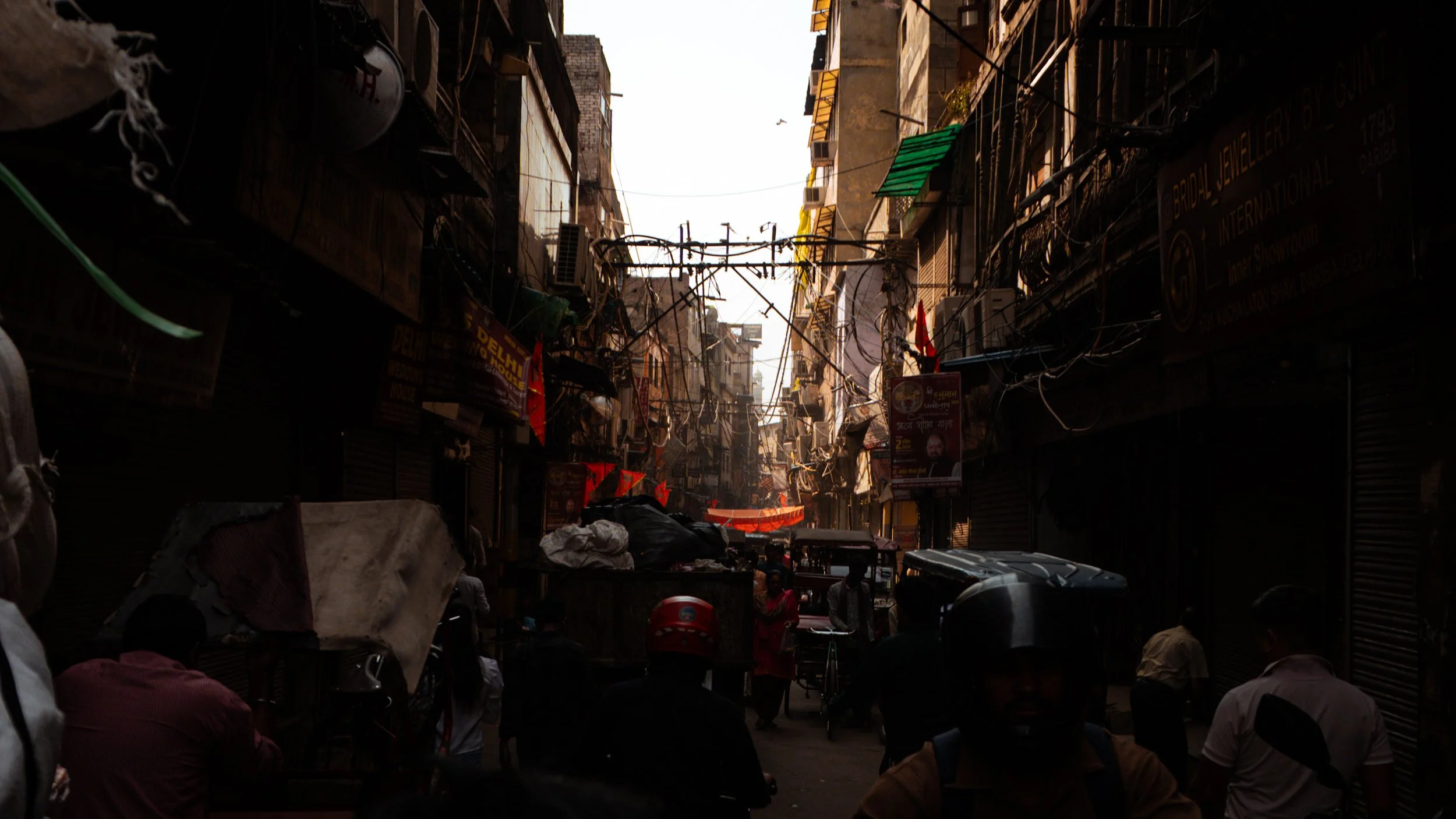
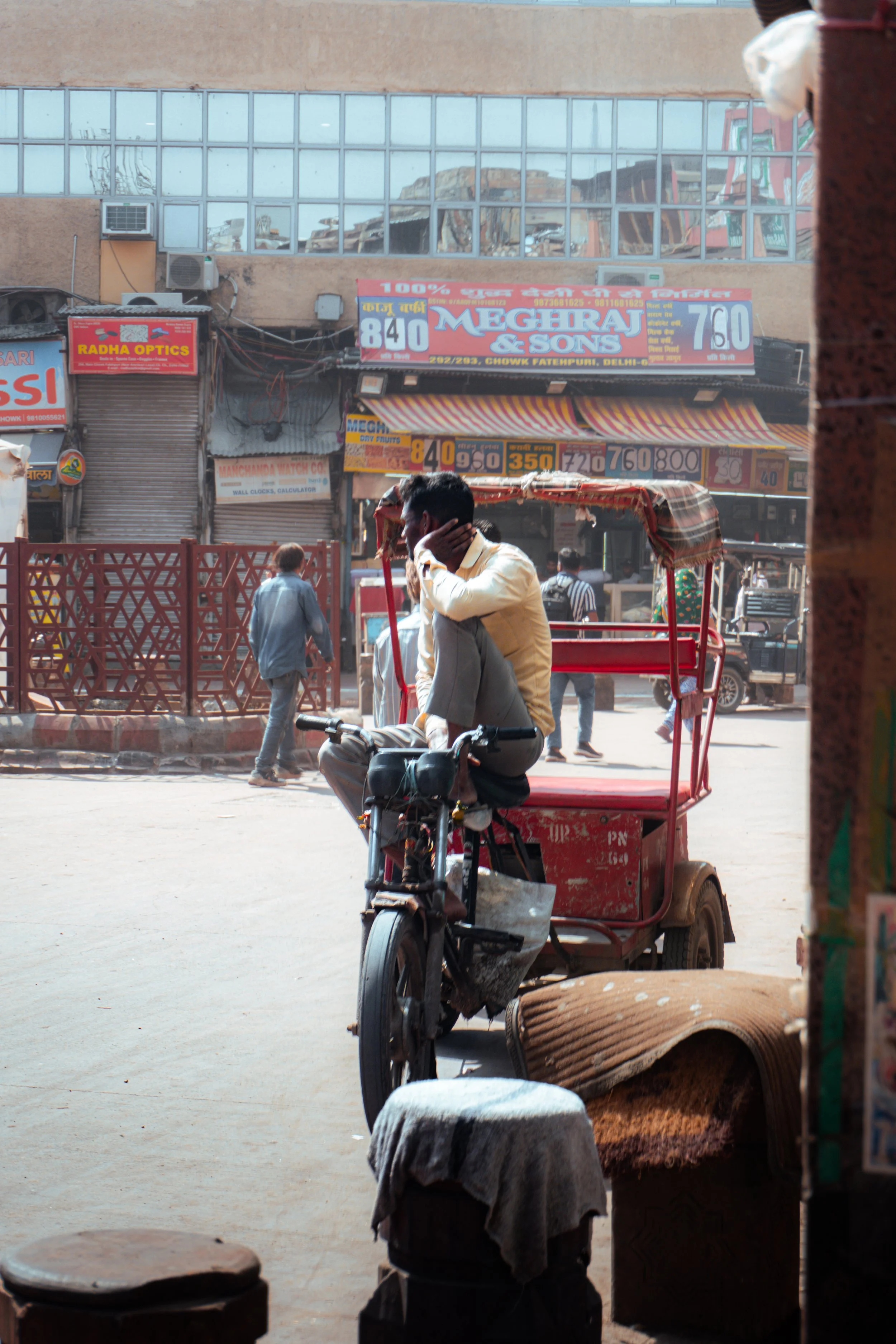
At Delhi airport, a driver was waiting for us with our car, an air-conditioned vehicle that stayed with us the whole trip. As soon as we arrived, he took us straight to the Jyoti Mahal hotel, right in the heart of New Delhi, so we could have a quiet dinner and sleep. That first night already gave us a sense of how things would go: a well-organized trip, no last-minute surprises, and time to see what matters most. We also quickly realized that it's the most populated city in the world, with lots of traffic, motorbikes and tuk-tuks everywhere and an enormous number of people.
And that's what this blog is about: sharing our experience in a country as special as India.
Delhi: The First Culture Shock (and the First Savings)
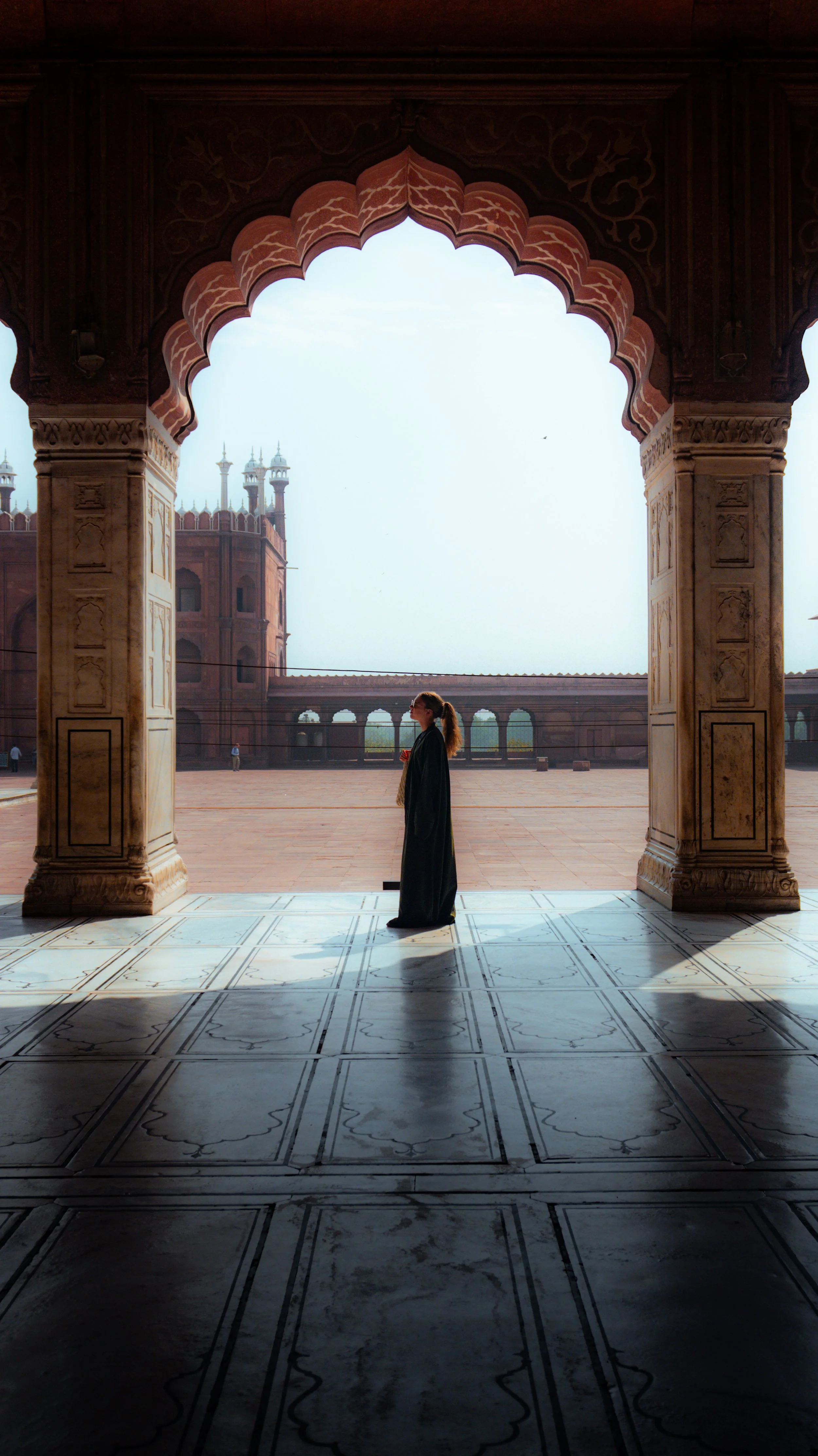
Our guide was waiting for us at the hotel entrance on the first day, ready to take us from New Delhi to Old Delhi. We started at the city's largest mosque, the Jama Masjid, and from there we gradually began to understand the religious and social divisions that coexist in one of the most populous countries in the world. It's impressive, very much so.
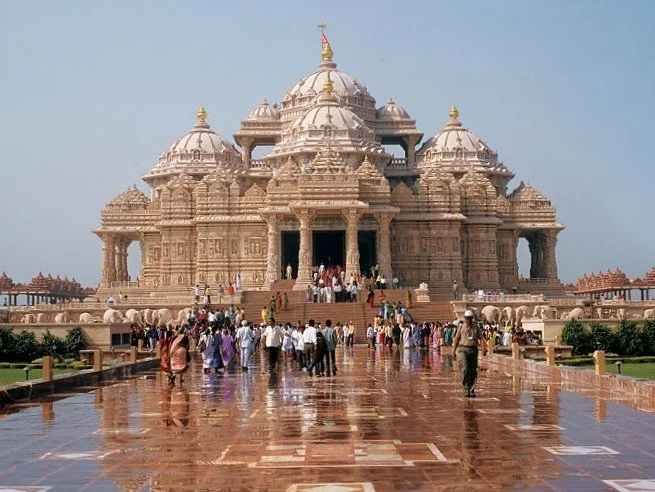
In the afternoon we reached the Akshardham Temple, one of India's great Hindu temples, and there we had the first surprise of the trip: you cannot enter with any electronic devices. No phones, cameras or smartwatches. It's a security measure applied at several major temples across the country after some serious incidents in the past, and there's no way around it. Our direct advice: leave your phone at the hotel or bring some loose change for the free cloakroom at the entrance. We left ours in the taxi so we could go straight in without wasting time.
We found our own food that first day, following the places our guide recommended. It's not cheap when it's good, and in Delhi, when it's good, it's very good, but it's usually not included in organized tours. For us, every rupee was worth it.
In the afternoon we took a tour of New Delhi, the most modern part of the city, which we found less interesting. We also visited the most important temple of Sikhism.
A first day that already amazed us and that we fully recommend. We learned a lot about this culture in just a few hours.
Agra: The Taj Mahal (and All the Things We Almost Missed Around It)
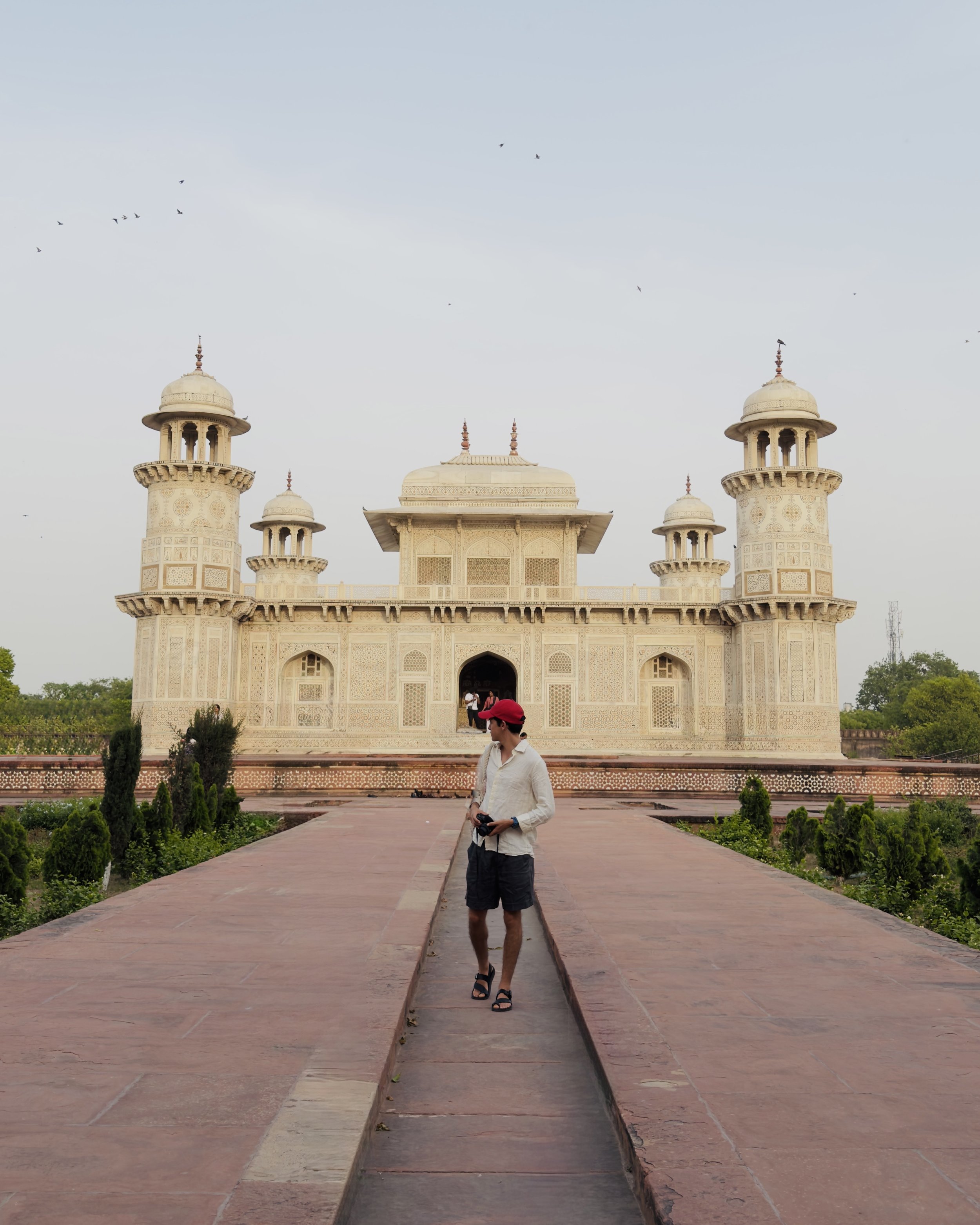
The drive from Delhi to Agra takes about three or four hours, so we arrived with plenty of time for our first stop: the Baby Taj, the Tomb of Itimad ud Daulah. It's nicknamed that way because it looks like a small preview of the Taj Mahal, with white marble, carved latticework and the same delicacy, and it's practically empty of tourists. If you have some free time in Agra, go. It's cheap, quick, and it helps you understand the Taj Mahal better before you see it.
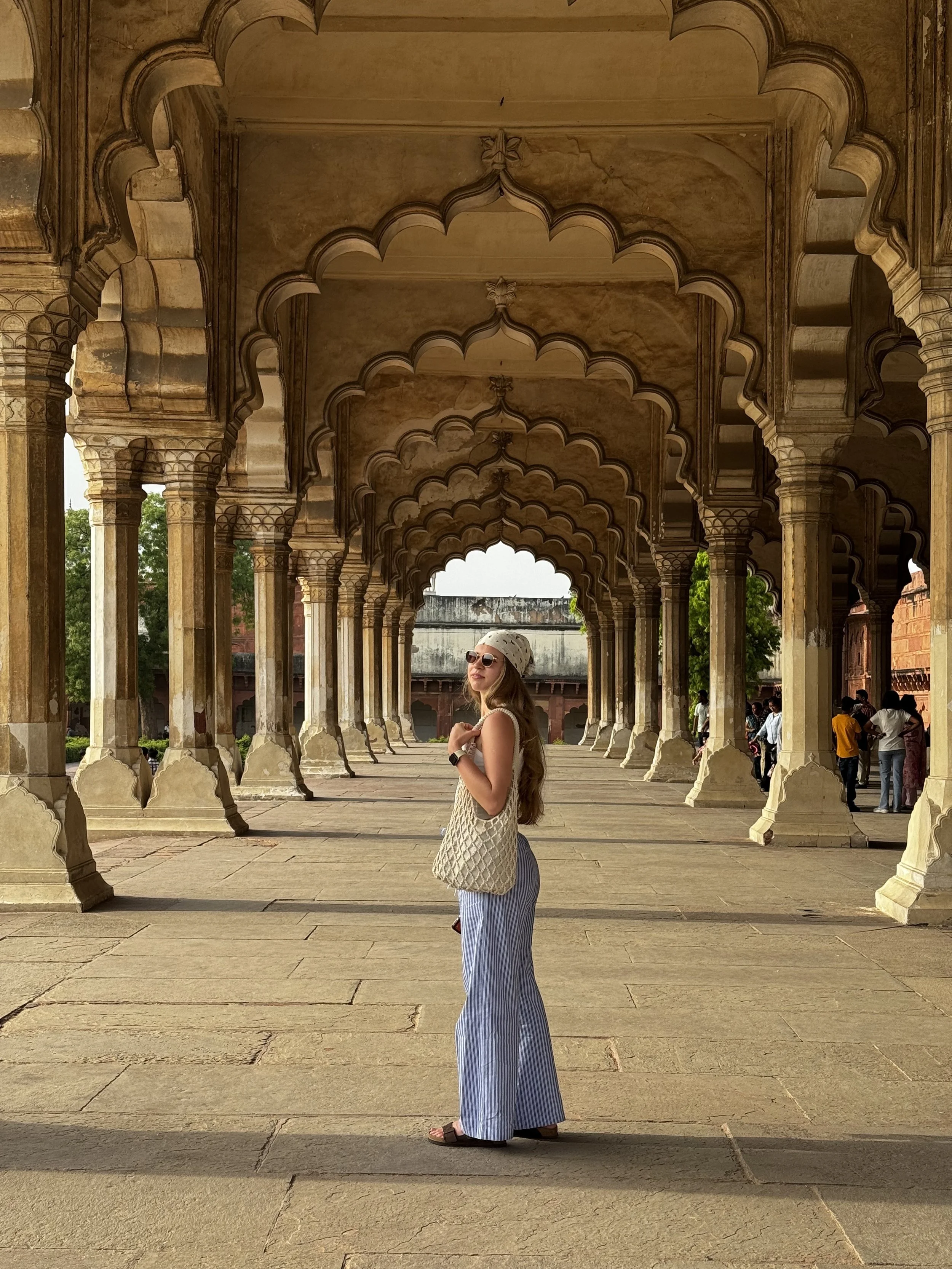
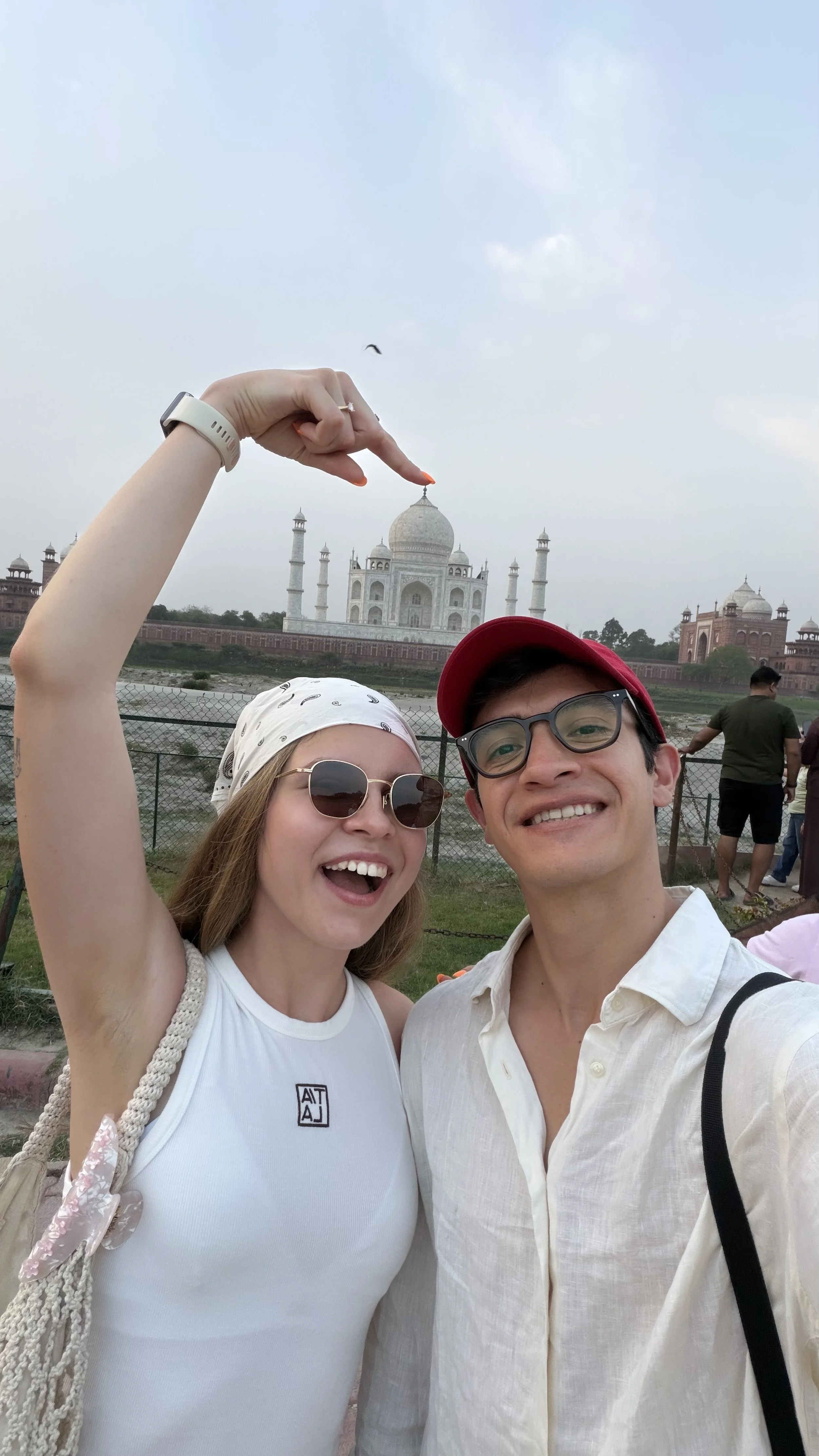
That same afternoon we climbed up to Agra Fort, from where you can see the Taj Mahal in the distance through the haze. We also crossed over to Mehtab Bagh, the garden on the other side of the Yamuna River, where, legend has it, Emperor Shah Jahan planned to build his own mausoleum, identical but in black marble. He never did: his son imprisoned him before he could start. We don't know if the legend is entirely true, but it's the kind of story that makes the site weigh even more than it already does.
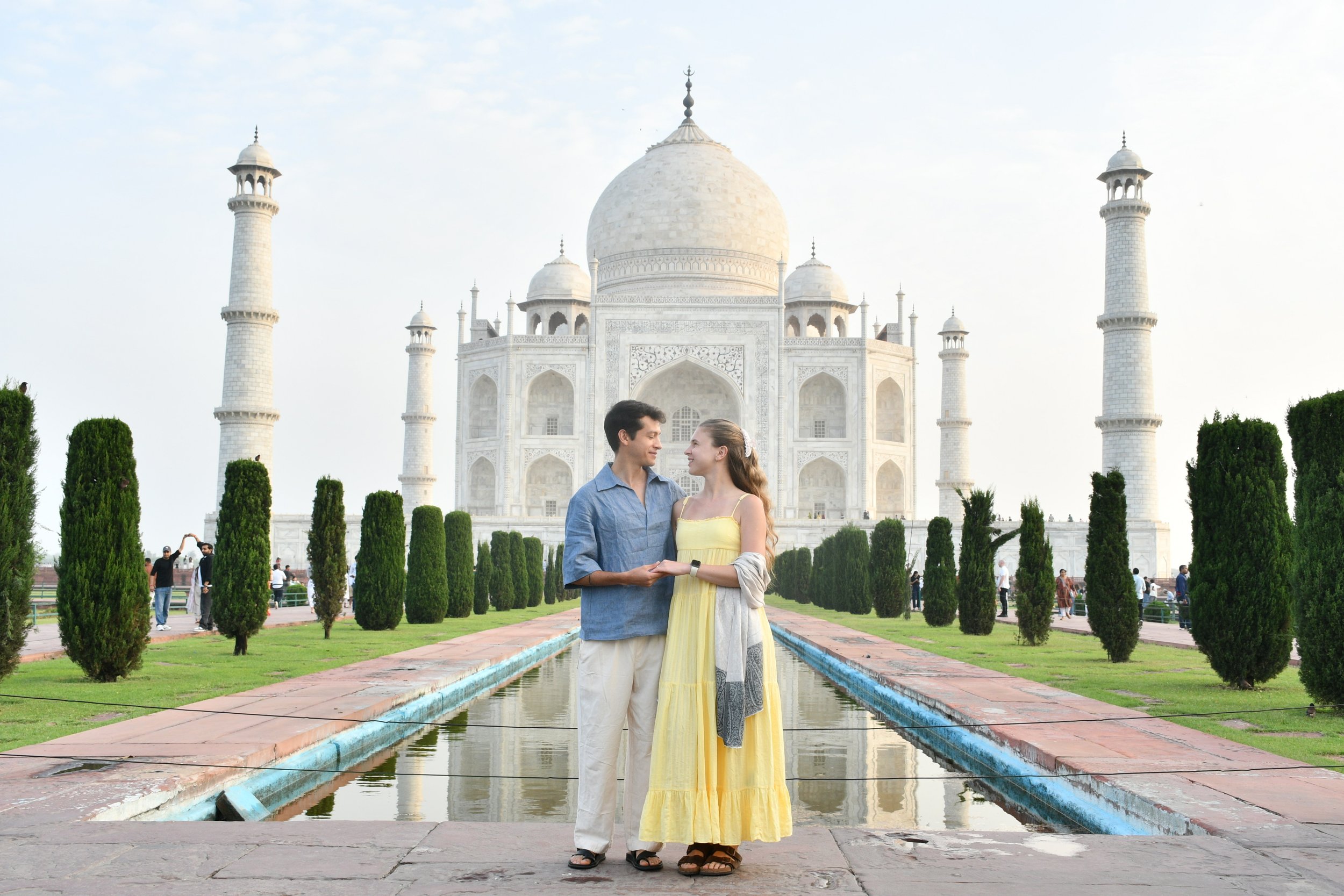
The big day was the third one. We left the hotel at four in the morning. Our hotel was very well located, Inara House, with views of the Taj Mahal from the terrace, so we didn't waste a minute, and by five we were already at the gate. There was already a line. We went in while the light was still grey and watched the marble change color as the sun rose. Those are the moments when photos don't do justice to what you're seeing.
We paid for a professional photo service right there, and we don't regret it: it's nearly impossible to get a good photo of yourself alone with so many people around, and the result was worth every euro. Be careful here, because they may want to take 50 photos or more. We also went into the mausoleum. It's not always open, but if it is, go in, it helps a lot to understand the real history behind the monument. In the end we stayed there almost the whole day. In the afternoon we had lunch and headed to our next destination.
From Agra to Jaipur: The Stop We Almost Skipped
The trip to Jaipur is long, about half a day on the road, but it's worth stopping on the way at Fatehpur Sikri, the walled city a Mughal emperor built and abandoned just a few decades later due to lack of water. It surprised us much more than we expected: the kind of stop that looks like a formality on paper and ends up being one of the most memorable parts of the trip.
India kept surprising us, and what's left of it.
Jaipur: The Pink City, Chaos Included
We arrived in Jaipur after dark, and dinner at the Rawla Rawatsar hotel was one of the best surprises of the trip: delicious and much cheaper than in Delhi or Agra. The next day, in daylight, we once again confirmed why India is described as organized chaos. Jaipur's streets are a constant flow of traffic with few visible rules, and yet, somehow, everything works.
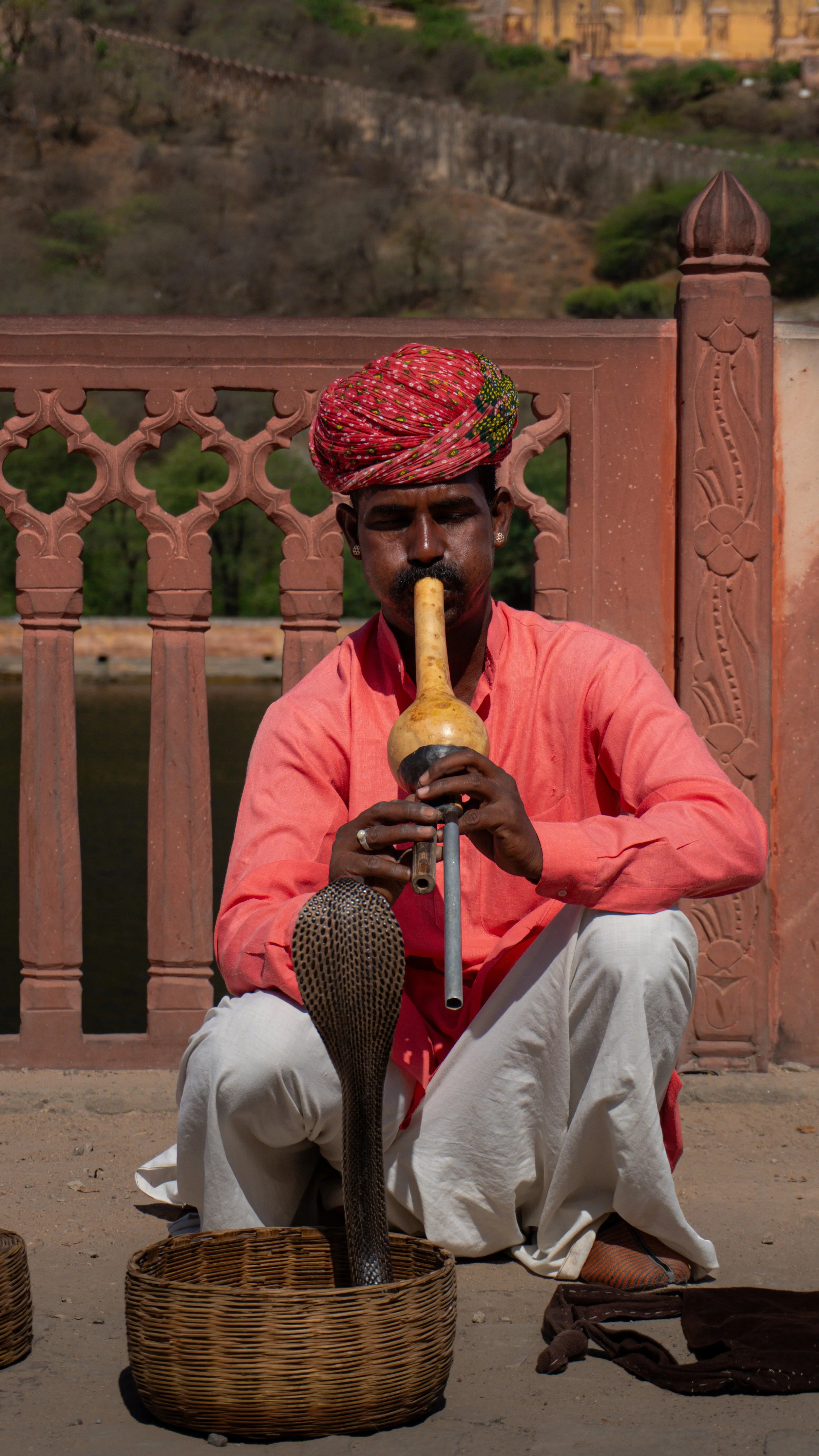
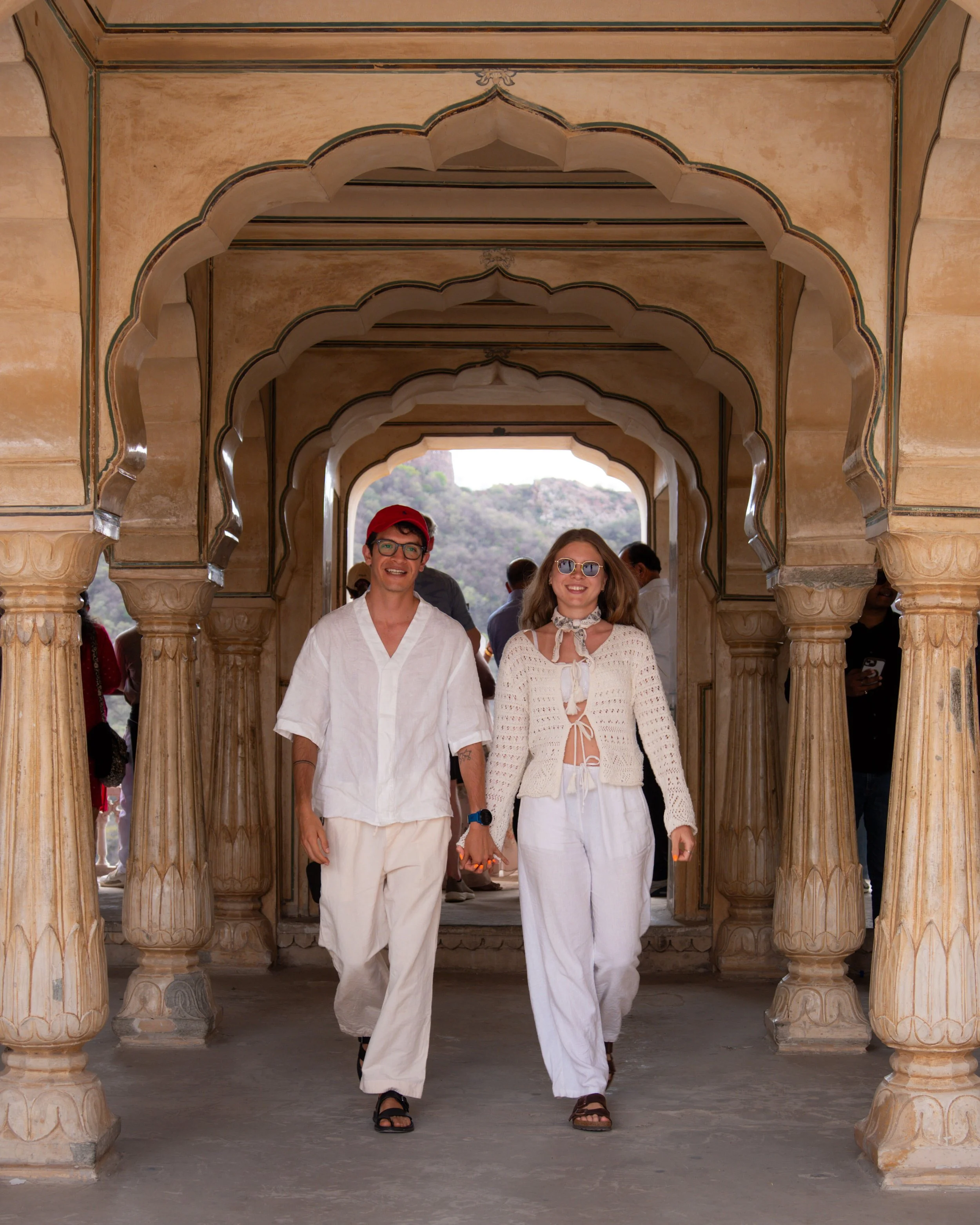
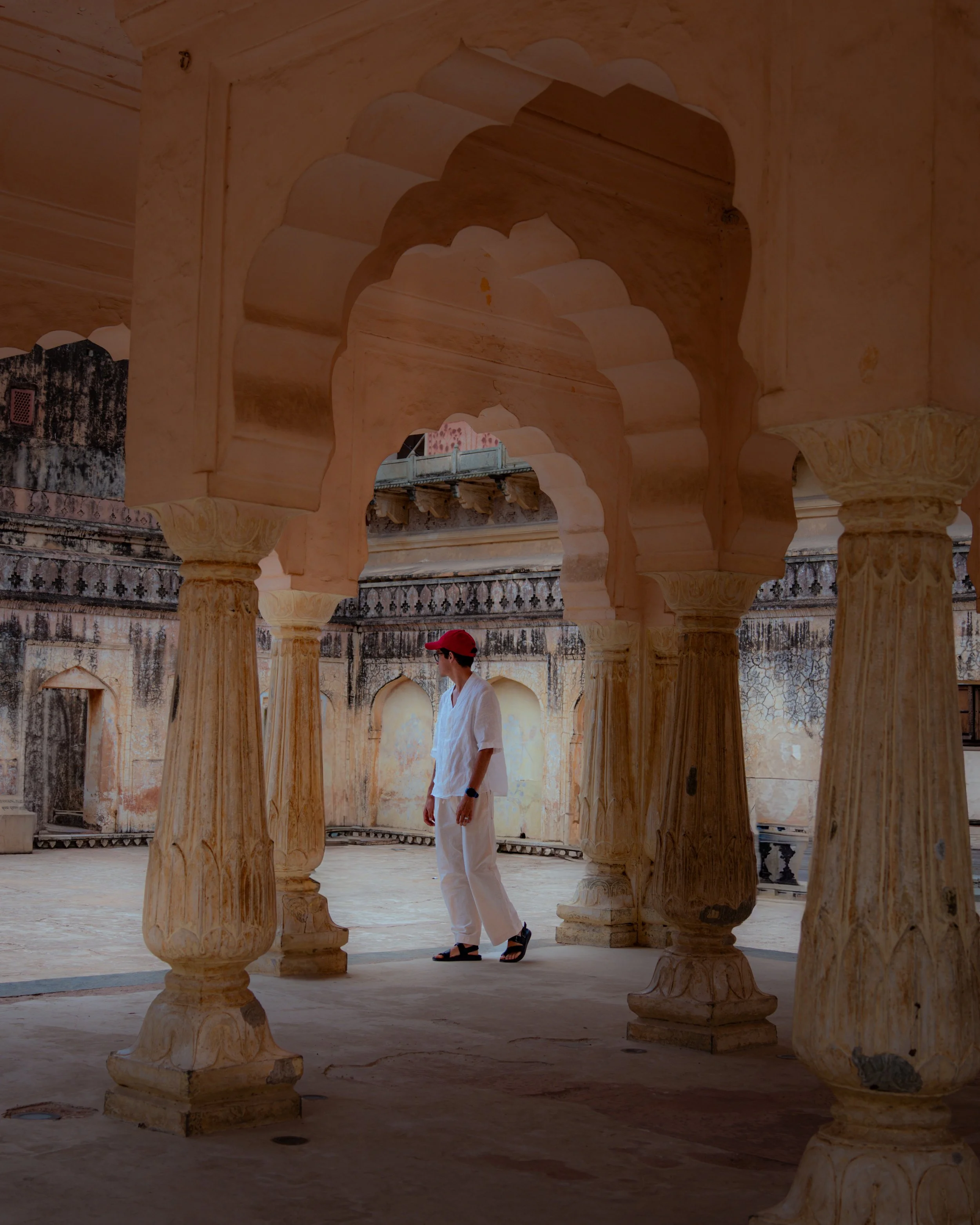
The second day in Jaipur was one of the best of the entire trip. We went up to Amber Fort, with a wall winding across the mountains. We were told it's the third longest in the world, right after the Great Wall of China and another fort in Rajasthan, and along the way we saw camels, elephants and even a snake charmer with his cobra, all in the same morning. It sounds unbelievable, but it's true. India is a country that stimulates you in every sense.
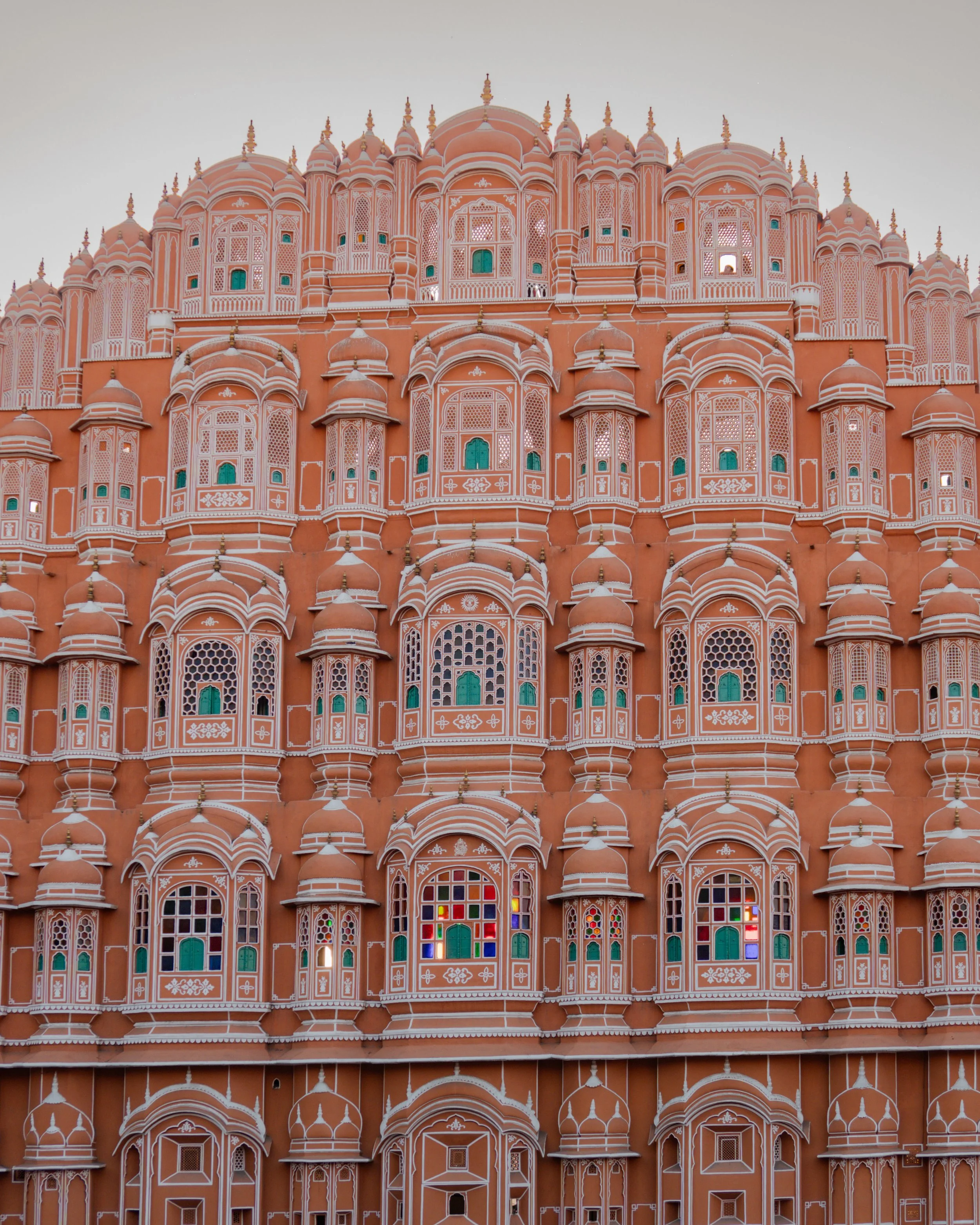
Afterwards we visited Jal Mahal, the palace that seems to float in the middle of a lake, and then the City Palace, where the royal family still has a presence, and where, as on almost the entire trip, we ended up buying a souvenir or two. A word of caution: souvenirs in India are beautiful, incredibly cheap, and very easy to accumulate without noticing. The budget disappears faster than you'd think. We finished the day at Hawa Mahal, the pink façade with hundreds of tiny windows that is practically the symbol of the city.
In front, you'll find several terraces to have a drink or a bite to eat, and for photos too. If you only want the photos, you'll still have to pay the entrance fee, which is about €2-3 per person.
Jhalana: The Leopards We Didn't See in Sri Lanka
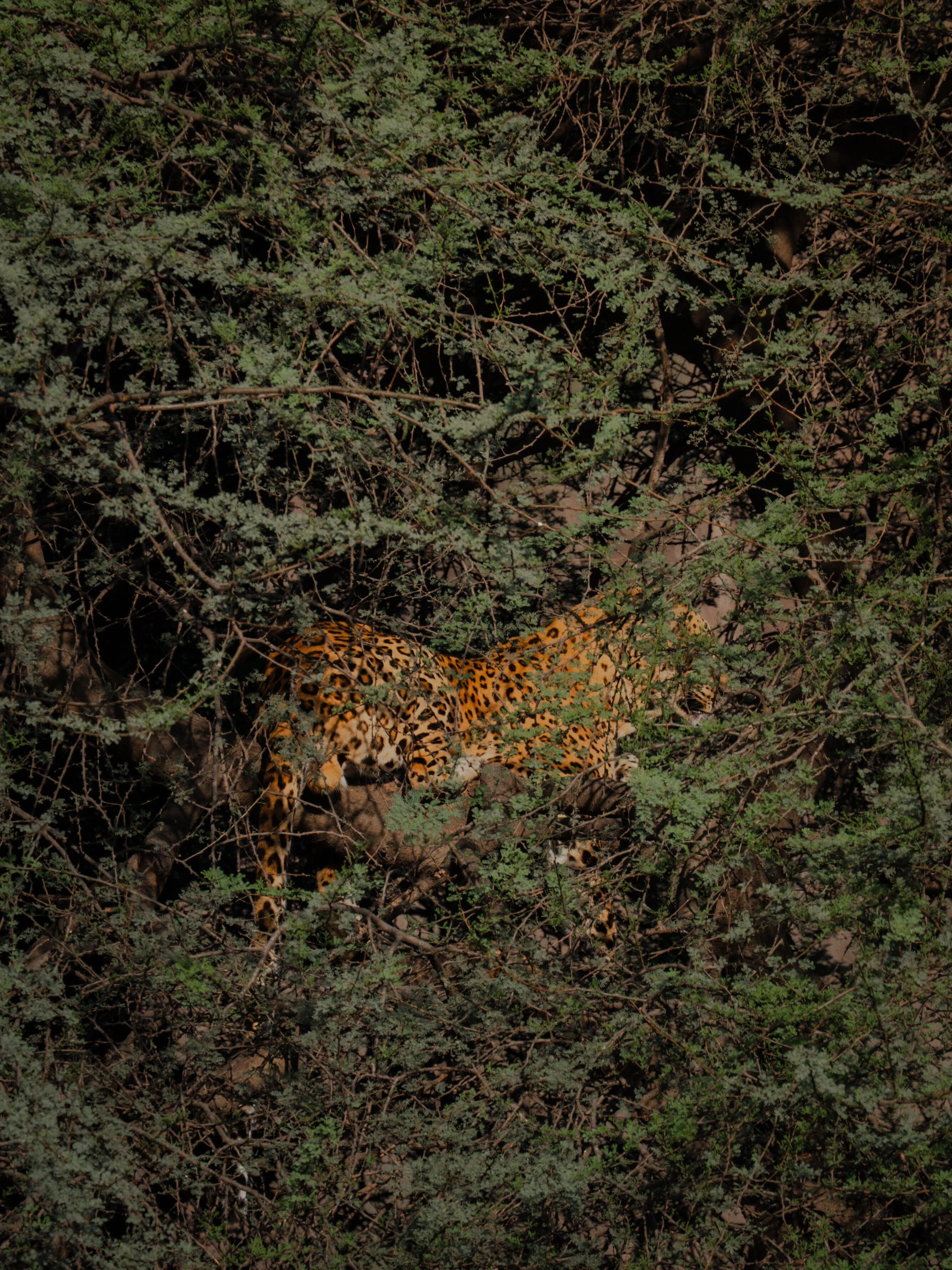
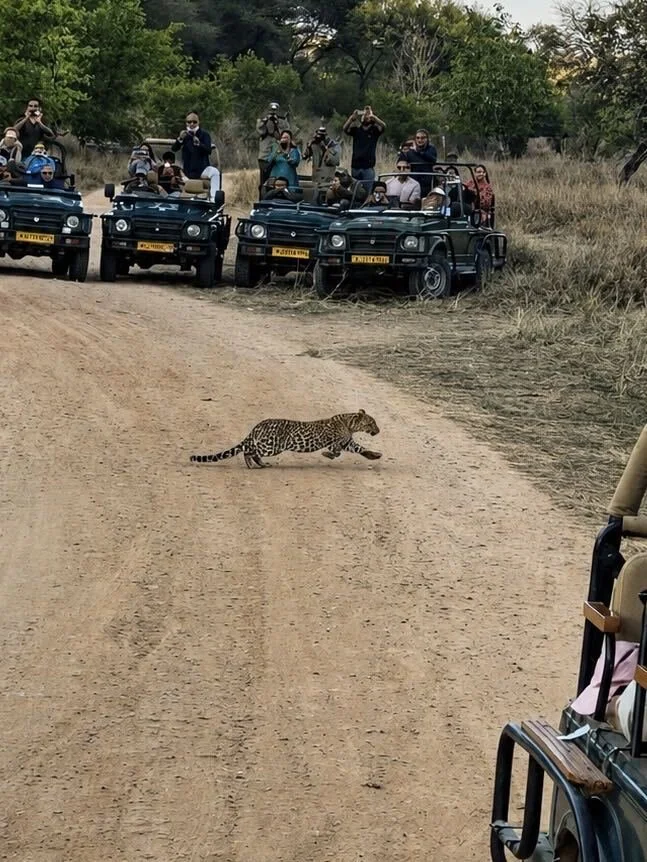
We set aside our last morning in Jaipur for a safari in the Jhalana Reserve, just half an hour from the center. We hadn't managed to see a leopard in Sri Lanka, so here we didn't hesitate. It didn't take us even half an hour to spot the first one, and shortly after, another one that was much bigger. Watching a leopard walk through the brush, without cages or artificial distance in between, is the kind of thing you never forget. As a bonus, we also saw plenty of birds and other animals along the way.
Back to Delhi and Departure
From Jhalana we returned to New Delhi, another four or five hours on the road, to sleep near the airport and take the return flight to Madrid the next morning with Etihad Airways, with a layover in Abu Dhabi. Tired, yes, but without any setbacks during the whole trip. If you have only a few days and want to make the most of them, condensing the Golden Triangle this way works. It's exhausting, but it works.
We did it with the company IndiaSomeday (use our promo code pedroandkaryna05) and we really recommend them because they're run by locals and they look after you at all times.
We've attached the route on Google Maps in case it helps with planning your trip.
💡 Pedro and Karyna's Tips for Saving Time and Money in India
🚗 Organized Tour vs. Going Independently: If you have only a few days, an organized tour with a car and guide is worth it. We paid about €500 per person for the air-conditioned car, one-day guides in Delhi, Agra and Jaipur, the Fatehpur Sikri tour and the leopard safari in Jhalana. Breakfast was included at all the hotels, except for the last night in Delhi. That money translates directly into time: no wasting hours looking for transport or haggling over routes.
💰 Real Budget: Counting the tour, the meals we paid for separately (almost none were included), the safari, the Taj Mahal photos and souvenirs, our total budget came to around €650 per person. Leave some room in your budget for souvenirs, they're so beautiful and cheap that they add up on their own.
📸 Pay for photos at the Taj Mahal : There's a photographer service right on the grounds. It's almost impossible to get a good photo of just the two of you with so many people around, so for us it was one of the best investments of the trip.
🗣️ Ask for a Spanish-speaking guide if you can: Local guides are very good, and if you understand the language well, you'll get much more out of the historical side, especially at places like Akshardham or Amber Fort, where there's much more context behind what you see at first glance.
⏰ Go early to the Taj Mahal: Even though we went in right when it opened, there was already a line. Going early won't spare you the crowds, but it will spare you the hottest hours and the worst light for photos.
❓ Frequently Asked Questions
What to See in India's Golden Triangle (Delhi, Agra and Jaipur)? In Delhi, Old Delhi and the Jama Masjid, plus the Akshardham Temple. In Agra, the Taj Mahal, the Baby Taj and Agra Fort, with a stop at Fatehpur Sikri on the way to Jaipur. And in Jaipur, Amber Fort, Hawa Mahal, City Palace and Jal Mahal. If you have an extra day, add the leopard safari in the Jhalana Reserve. We did it and it didn't take much time.
Is It Better to Travel to India Independently or with an Organized Tour? If you have only a few days, an organized tour is worth it: it saved us hours of transport, looking for guides on our own and haggling over every route. It cost us about €500 per person (air-conditioned car, one-day guides in each city and several entrance fees). If you have more time, going independently is cheaper, but you lose time that we didn't have.
How Much Does a Trip to India's Golden Triangle Cost? For us, the whole trip cost about €650 per person, including the organized tour, the meals we paid for separately, the Jhalana safari, the professional Taj Mahal photos and souvenirs.
When Is the Best Time to Visit India? Between November and March, with temperatures of 18 to 28°C and good visibility for the monuments. Avoid May and June, with temperatures above 45°C, and July–August, during the monsoon.
What Is India's Golden Triangle? India's most classic tourist route in the north: Delhi, Agra and Jaipur, three cities a few hours' drive apart that are home to some of the country's most famous monuments, with the Taj Mahal as the star attraction.
Is It Safe to Travel to India?
We'd say yes, we didn't have any problems, but it's true that we always had a guide with us. There are lots of people and chaos that can be scary, but overall it's a safe country. When it comes to money, it's best to carry just enough cash, and the ATMs work well if you need anything more.
India left us exhausted and wanting to go back in equal measure. Seven days is enough for a lot if you know where to spend your time and where not to. Have you been to the Golden Triangle? Did you go independently or on an organized tour? Tell us in the comments 👇
