The Costa Brava, crystal-clear beaches, incredible little villages and truly movie-worthy scenery. We had been looking forward to this trip for a long time, since we had seen photos and videos of so many iconic places for ages, so we decided to make this getaway in the middle of summer.
We left Valencia early on Friday, because the drive is long and we wanted to make the most of the weekend. In short, there's a garden floating over the Mediterranean in Blanes, a medieval wall that will leave you speechless in Tossa, hidden coves in Begur, and the white streets of Cadaqués full of art (and plenty of tourists). There was also an unplanned stop that made this trip even more special, and we'll tell you about it at the end.
That was our August: Valencia–Costa Brava by car, three days, and a route that left us wanting to go back.
If you still have your summer unplanned, take note.
Day 1: One of the most beautiful gardens in the world is in Blanes
We left Valencia at 7 in the morning. Four and a half hours of driving, but with the coastal views it was already worth it. Our first stop was the Marimurtra Botanical Garden, in Blanes, and right from the start we were in "wow, how beautiful and extravagant" mode.
Marimurtra perches on the cliffs north of the town. It was founded by Carl Faust, a German businessman who arrived in Catalonia at the end of the 19th century and decided to spend his fortune on a dream: bringing plants from the five continents and planting them above the Mediterranean. The result is more than 4,000 species spread across a huge site with the sea always in the background.
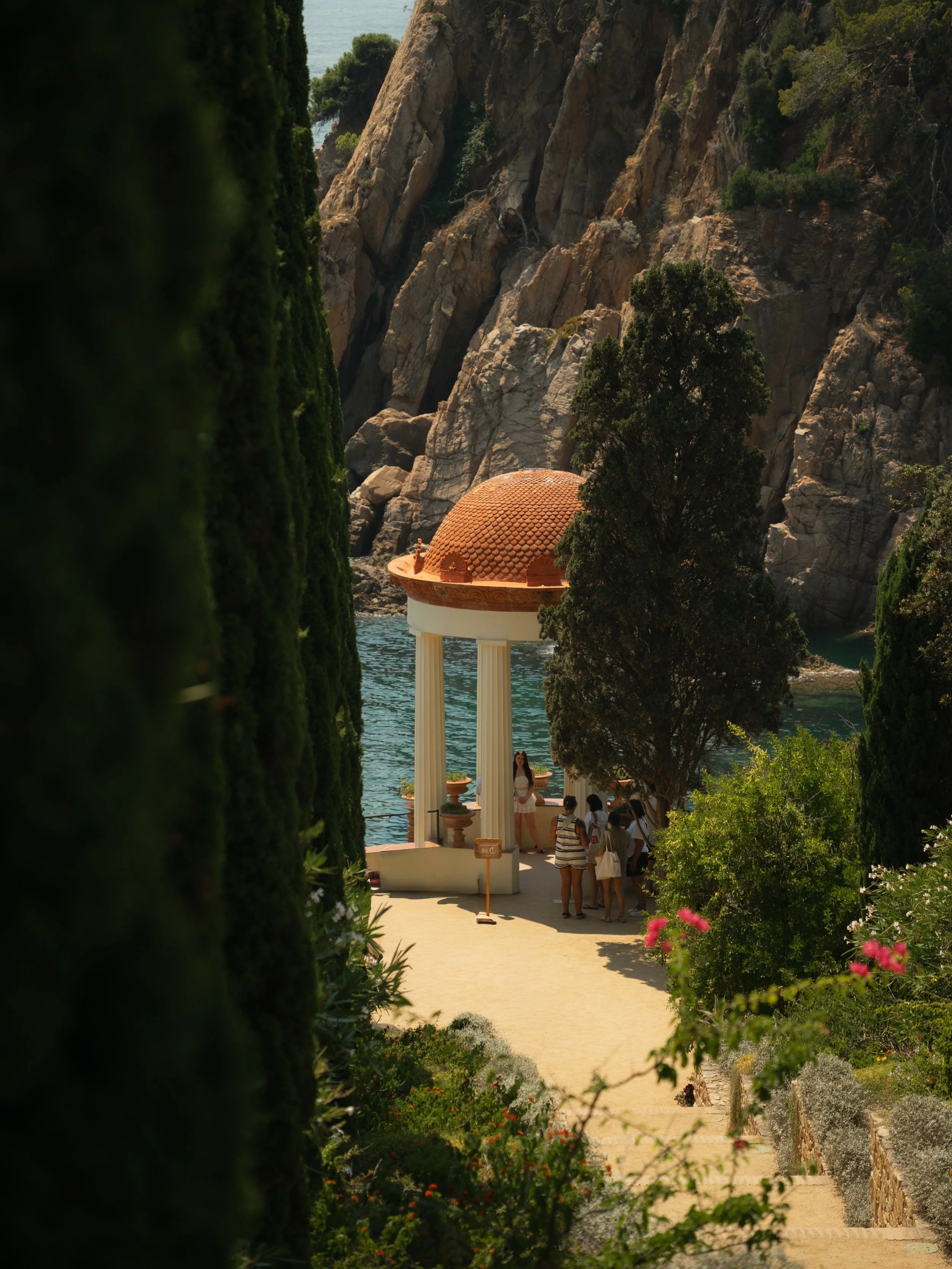
Marimurtra Gardens, Costa Brava
The most photogenic spot is the Templet de Linné, a small classical-style temple perched on the cliff that seems to float over the water. When you see it in person you understand why people have it as their phone wallpaper. Entry costs around €10–12 per person, and you'll need an hour and a half to two hours if you stop to really look around, which is well worth it.
Besides this iconic photo spot (we didn't take the shot because there were too many people), there are many other beautiful and very photogenic places in the garden. There's also a bar where you can buy something to eat and drink, and in summer you'll need to take a break.
From Blanes we headed to Tossa de Mar, 30 minutes further north. We had lunch in the historic center and in the afternoon we went to explore the medieval walls. This one really surprised us: it's the only walled medieval town on the entire Catalan coast. Dating from the 13th century, with seven round towers, the sea crashing against the rocks, and charming little alleys with doors and vertical gardens. We arrived just before sunset, so we got a really lovely evening view to end this first day, which already had us completely charmed.
We had dinner at L'Espai, with a reservation made in advance. The food and service were spectacular, so we definitely recommend it. To wrap up the day, we stayed that night at Hotel La Carolina in Lloret de Mar.
Heads up, parking in Tossa can be a real nightmare because of the number of people in high season.
Also keep in mind that there are lots of activities all along the Costa Brava, which you can book through Get Your Guide :)
Day 2: Begur, Cala Sa Tuna and the Camí de Ronda
Breakfast at the hotel, check-out and a quick pit stop at Beanywood Café in Platja d'Aro. We were really hyped because we watch a lot of Clavero on YouTube, but honestly our experience was disappointing. The prices aren't cheap and the matcha latte came out of a big plastic bottle, they didn't even make it on the spot.
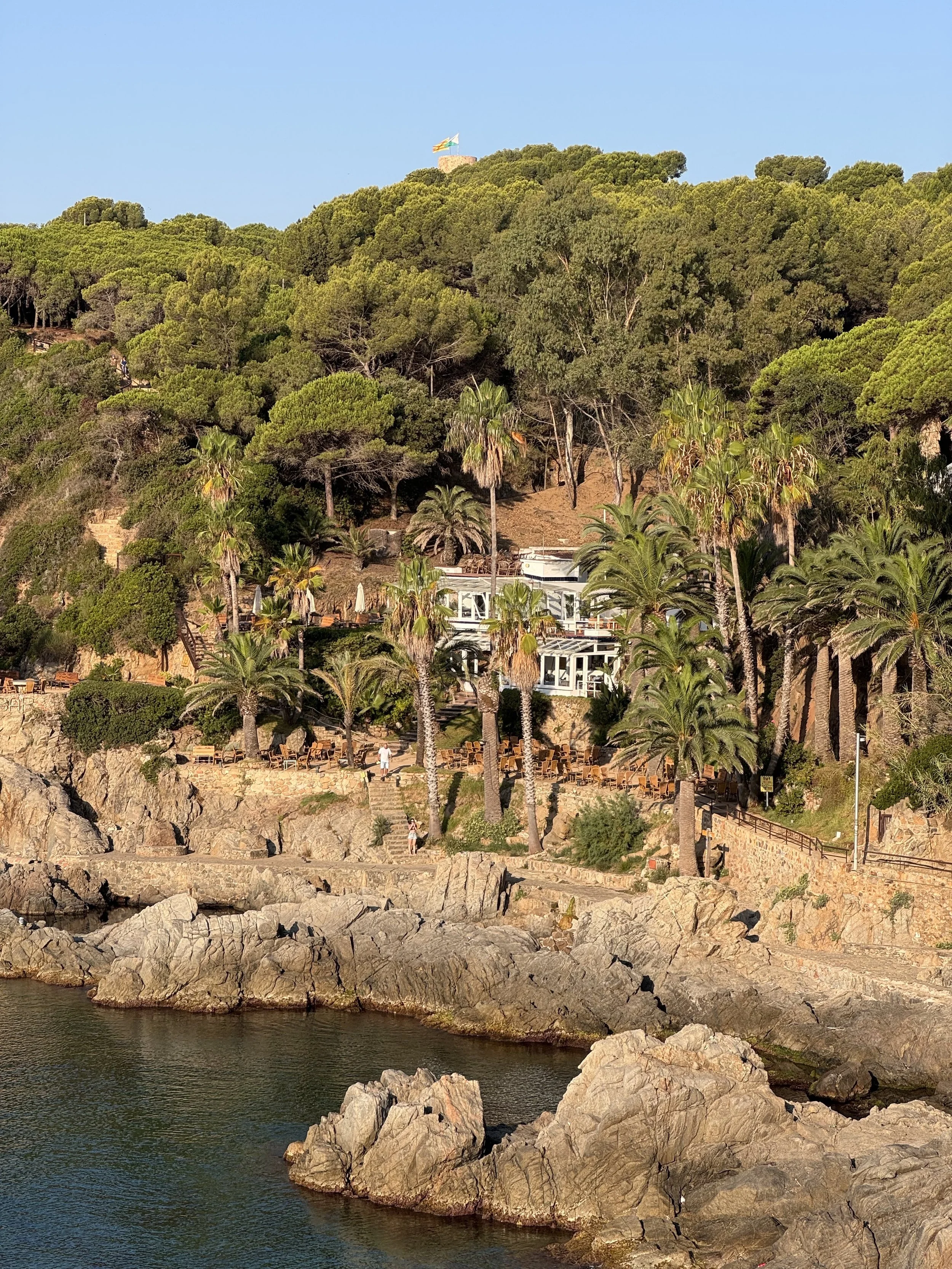
Then we went to our next destination. Begur was the highlight of the trip. A village on top of a hill, with the ruined castle gazing out at the horizon and the streets of the old town perfect for getting lost in with no plan. It doesn't have the fame of Cadaqués or the tourist pull of Tossa, but it has something the others don't: real tranquility, even in August.
We don't really recommend doing the walk in 40-degree heat, but if you want a panoramic view, going up to the castle is worth it. What's more, there's plenty of parking and places to eat here. We stopped in the central square at a tapas and pintxos bar.
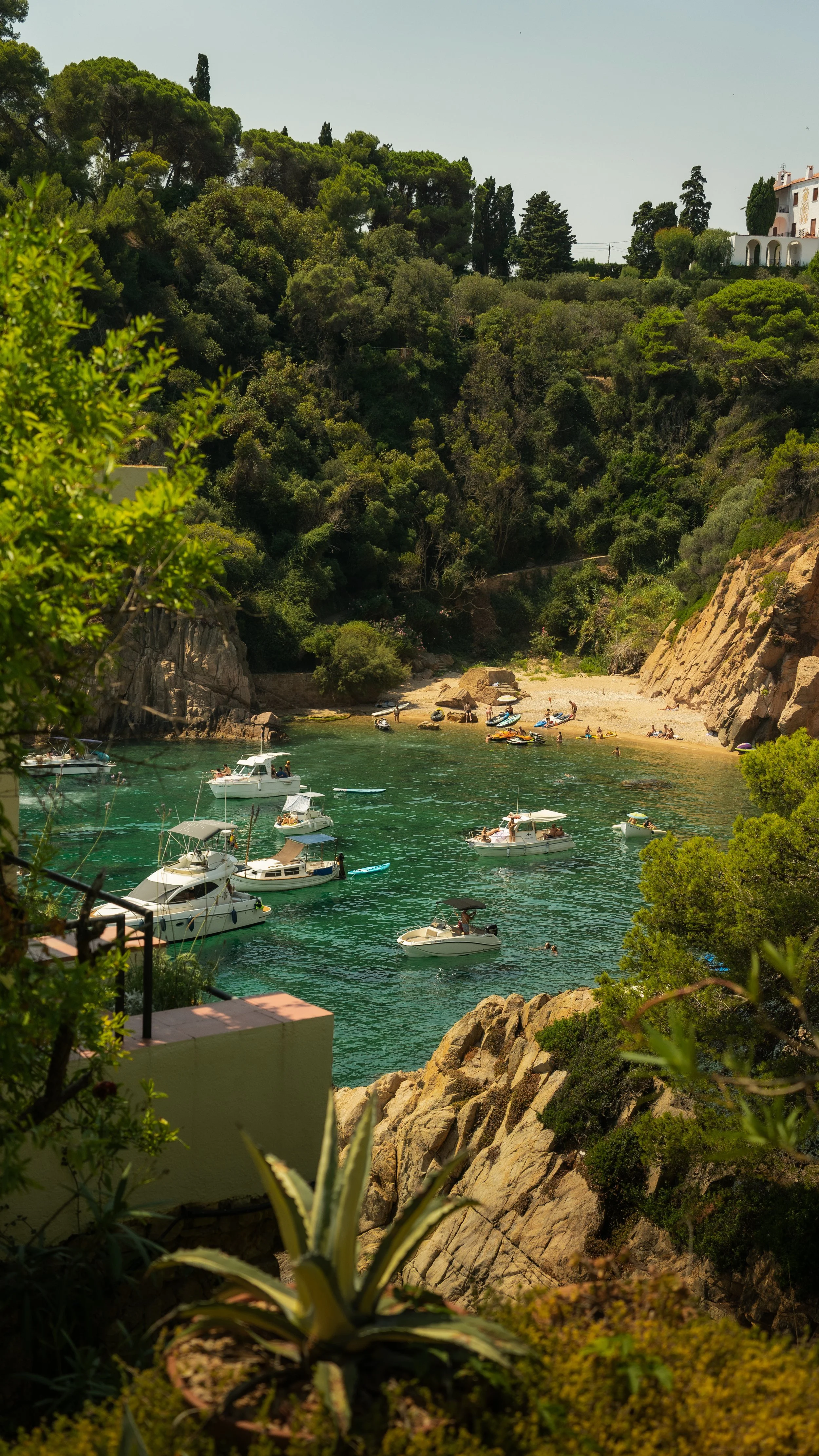
Then we walked down to Cala Sa Tuna and that's when we understood why the Costa Brava has the reputation it does. Turquoise water, little boats on the shore, a handful of houses around. We went for a swim, waited out the midday heat, and then walked the stretch of the Camí de Ronda between Sa Tuna and Aiguafreda. It's 15–20 minutes each way, very easy, with sea views the whole time and small coves appearing between the rocks. This coastal path connects a large part of the Costa Brava, and if we'd had more days we would have kept walking much further. You can take really cool photos here, but keep in mind there will always be people because the spot is so beautiful.
At the end of the afternoon we stopped by the viewpoint to see Aiguablava. The water at that spot has a darker blue without direct sunlight, but it's still spectacular.
That night we stayed at Hotel Mas Palou in Roses, close to our next destination. We had dinner at the hotel and rested after another long day, tired but with good memories.
Day 3: Cadaqués, Peratallada and the way home
We left Roses after breakfast and a quick dip in the hotel pool. Cadaqués is 50 minutes of winding roads away. The road already warns you what's coming: narrow, twisty, and it reminded us of our trip to the Dolomites (you can read the blog here). Parking inside the village in August is practically impossible, so leave your car at the Saba car park at the entrance and continue on foot. It's a ten-minute walk to the center, without the stress of looking for a spot between the streets. In high season, go very early or be ready to leave your car on the different hills.
Cadaqués has streets so white they hurt your eyes in the August sun, and that's exactly how it is. Whitewashed houses, blue doors, paving stones that the sailors themselves collected from the shore over generations. It has that quality very few places have: even if you go in summer, once you step two streets inland you can already see why this village is so famous, one of the most beautiful in Spain.
We had lunch at Casa Nun, reserved for 1:30 pm. We ate a paella in an intimate atmosphere, exactly the kind of place you look for when you want to eat well, although the rice didn't entirely win us over.
In the afternoon we strolled along the seafront promenade to the Pujada des Pianc viewpoint, which is the one that really deserves the photo: the whole white village, the bay with its boats, the Santa Maria church up top. Arriving in the heat can be exhausting, but we recommend stopping in its streets, taking photos and enjoying the village's charm in general.
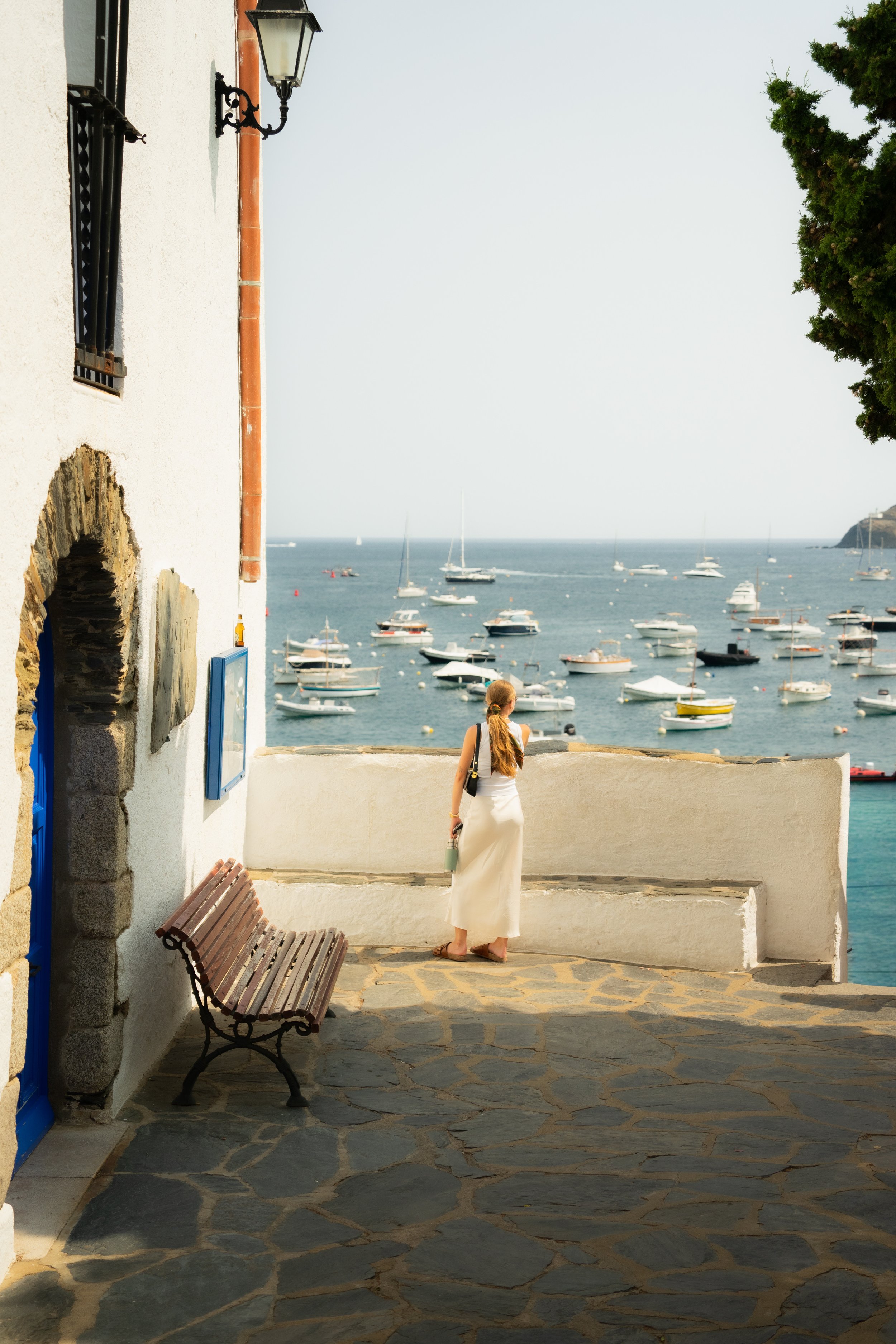
One fact we found fascinating: for centuries Cadaqués was practically cut off by land, surrounded by mountains, more connected to the sea than to the rest of Catalonia. Dalí, Miró, Chagall and Picasso all ended up passing through here. The isolation had something magnetic about it. And even today, when you arrive after those curves, you understand it.
With so little time, we didn't have a chance to visit the Salvador Dalí House Museum, so if you like art, don't skip it.
The drive back from Cadaqués to Valencia was a trip we didn't want to make, because of how long it is and because we were leaving behind all these places. However, on the way we found a village that was the perfect finishing touch to this summer getaway.
Peratallada: the movie-set village that snuck into our route
On the way to Valencia we detoured to Peratallada, and the name alone says it all: literally carved from stone. The houses, the streets, the staircases, everything is living rock sculpted over centuries. It's one of those places where you wonder whether you're in a village or a medieval movie set, because it seems impossible that something like this really exists.
Walking through it is very easy, you can see the whole place in 45 minutes, with its little alleys, its restaurants with terraces, and that village calm that hasn't tried to modernize to please anyone. And if you like ice cream, there's one of the best here according to Jordi Roca. There may be a queue, which depends on each person, but we consider it part of the plan.
From Peratallada we resumed our way to Valencia feeling that we had packed those three days in very well.
💡 Tips for your trip
🚗 A car is essential Without a car, the Costa Brava is a different destination. Begur, Cala Sa Tuna, the Camí de Ronda, Cadaqués, Peratallada: none of these have decent public transport. Book in advance, because in August demand is high and prices go up if you wait until the last minute.
🅿️ About parking In Tossa and Begur there are paid parking zones, but you can find a spot if you arrive before 10 am. In Cadaqués in August it's on another level: head straight to the Saba car park at the entrance to the village and forget about searching in the old town, since sometimes there isn't even access.
🏨 Where to stay We split our trip between Lloret de Mar and Roses. If you can, stay one night in Begur or in Cadaqués itself: these are destinations that completely change when the day-trippers leave.
🍽️ Always book ahead L'Espai in Tossa and Casa Nun in Cadaqués require reservations in summer. Don't leave dinner to chance in August on the Costa Brava.
🌊 The coves Cala Sa Tuna in Begur is our favorite of the trip: small, peaceful and without the crowds of the better-known ones. Go before midday or after 5 pm to avoid the peak.
🏰 Don't skip Peratallada If you're heading south from Cadaqués, it's on the way and it's worth a stop, even if it's just an hour. A medieval village carved in stone, beautiful little alleys, and Jordi Roca's ice cream as the perfect excuse. Enough said.
📅 When to go We went in mid-August and it was very enjoyable. If you can choose, June or September are perfect: the water is still warm, there are far fewer people, and you can find parking without drama.
Have you been to the Costa Brava? Do you have any cove or village that we missed?


We did the Buñol Water Route before the closure: Turche Cave, Charco Mañán and Palomas Cave, about 6 km, 40 minutes from Valencia. We tell you what each stop is like, how to get there by car, train or bus, and the current status of the cave, closed until April 2027. One of the best routes within the Valencian Community.